The Atlantic flyway concentrates over a narrow coast
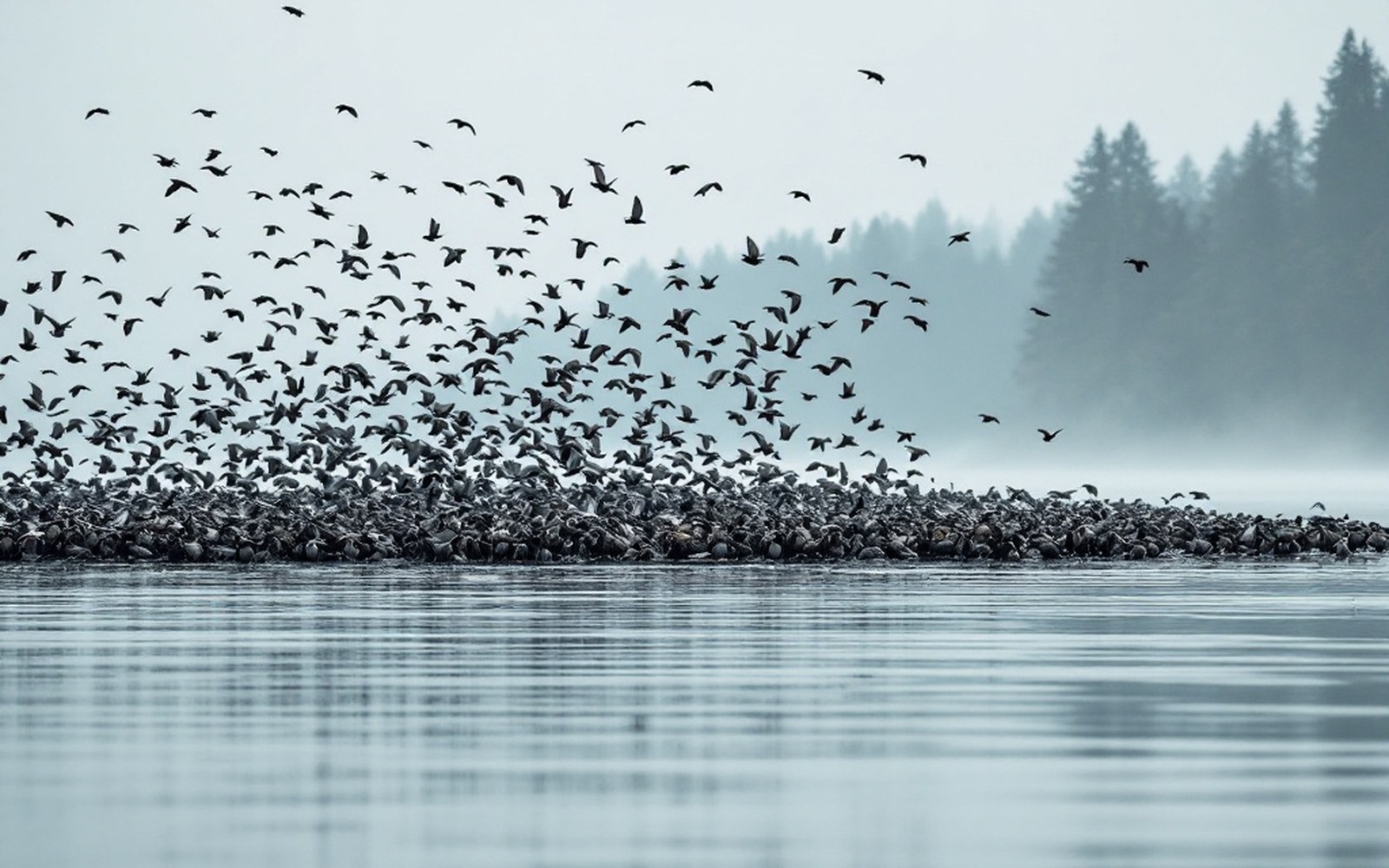
Every autumn, the eastern seaboard compresses a continent's worth of birds onto a thin strip of sand.
The coast funnels migration into a strip narrow enough to count from one place.
The mechanics of the funnel
Migration is not a single grand procession. It is thousands of separate decisions made by individual birds responding to temperature, wind direction, photoperiod, and fat reserves, and the Atlantic flyway is the name we give to the aggregate result of those decisions when they push birds down the eastern edge of the continent. The flyway is not a fixed corridor — it is a tendency, a gravitational lean toward the coast as birds drift east looking for the leading edge of a cold front, or simply follow the coastline because it offers open water on one side and a navigational baseline on the other.
Virginia sits at a critical latitudinal hinge along this system. The state's western mountains and interior valleys funnel certain species in one direction; the coast funnels everything else toward the sea. Birds riding a northwest wind after a cold-front passage pile up along the shore because they cannot keep moving east. The barrier islands and the inshore marshes trap them, briefly and productively, before the next leg of travel.
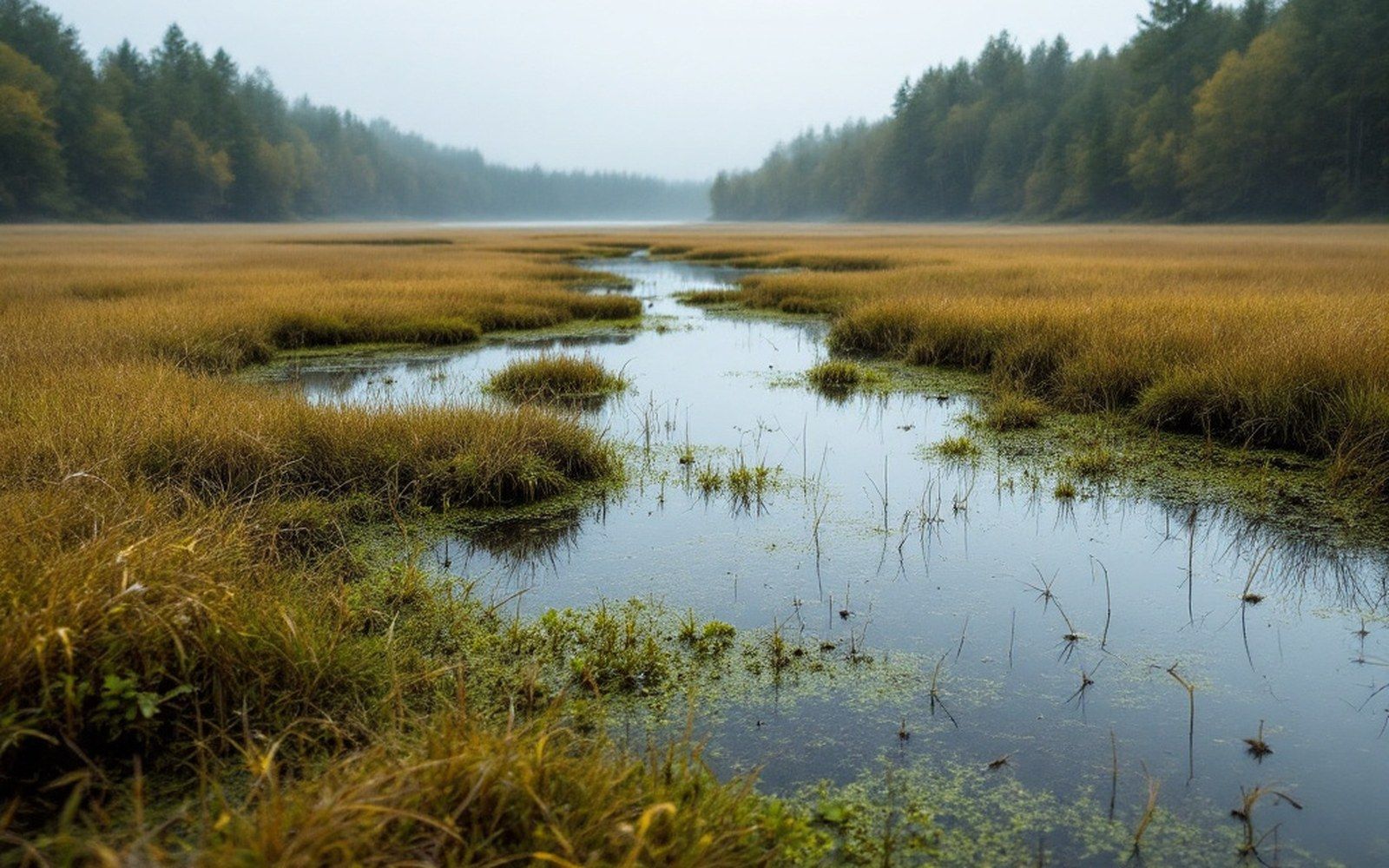
Back Bay, low water.
The mechanism is essentially a narrowing: a broad front migration that crosses the Appalachians becomes increasingly coastal as birds reach the Piedmont, and the Piedmont delivers them to the narrow strip of land and marsh that separates the Chesapeake Bay from the open Atlantic. At the seaward edge of that strip — Assateague, Chincoteague, the chain of undeveloped barrier islands south toward False Cape — the birds run out of land. The result is concentration, and concentration is what makes these places remarkable to visit in October.
What moves, and when
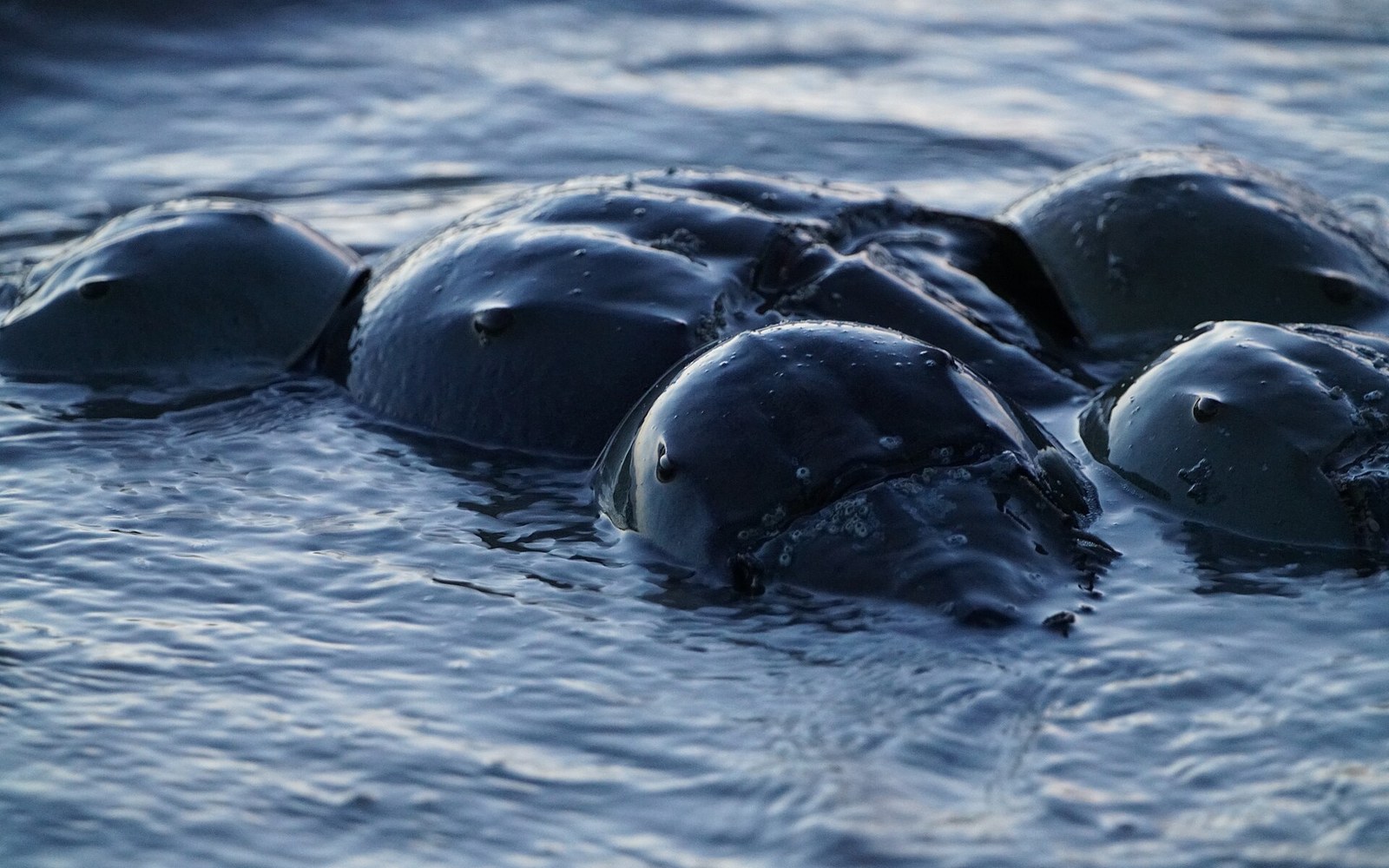
The shorebirds come first. By late July, adult sandpipers and plovers are already heading south from breeding grounds in the Canadian Arctic, and the Virginia barrier islands receive them while summer still feels absolute. These are birds — red knots, dunlins, sanderlings, semipalmated sandpipers — that may have flown nonstop from James Bay or beyond before touching down to refuel on intertidal flats. Their passage is tied, with unusual precision, to the availability of horseshoe crab eggs earlier in the season on Delaware Bay; birds that fatten there in May arrive on Virginia beaches in better condition than birds that do not.
What moves the birds
Cold-front passage
northwest wind after a front pushes birds east and stacks them along the coast; the night after a front is when fallout happens
Photoperiod
changing day length is the primary trigger for departure, independent of weather
Fat reserves
birds need adequate fuel load before crossing open water or making long overwater legs
Horseshoe crab eggs
fat source on Delaware Bay in May that conditions shorebirds for the full southward journey
Warblers and other neotropical songbirds peak in September, moving through the shrubby vegetation of the island interiors and the edge habitat of the refuges behind the islands. A cold front that stacks birds along the coast one evening will produce a fallout the following morning — a term of art for the sudden presence of exhausted birds in trees that were empty the night before. Back Bay National Wildlife Refuge, at the southeastern corner of the state, and the Chincoteague National Wildlife Refuge farther north on Assateague are both positioned to catch these events.
Raptors run a parallel migration on a slightly different schedule. Merlins and ospreys move early; Cooper's and sharp-shinned hawks peak in October; then come northern harriers, rough-legged hawks, and the occasional golden eagle pushing through as November cools. Raptors avoid crossing open water when possible, so they ride ridges and coastlines, and the coastal dunes and pine stands of the barrier islands concentrate them the same way mountains concentrate them at inland hawk watches.
Waterfowl come last and stay longest. Canada geese, tundra swans, and the diving duck species — scaup, surf scoters, black scoters — move through the Chesapeake Bay and the coastal impoundments well into December. Back Bay is best known as a winter destination for snow geese, which arrive in numbers visible from a distance, whitening the margins of the impoundments that were built specifically to hold shallow water for overwintering birds.
The islands as a physical fact
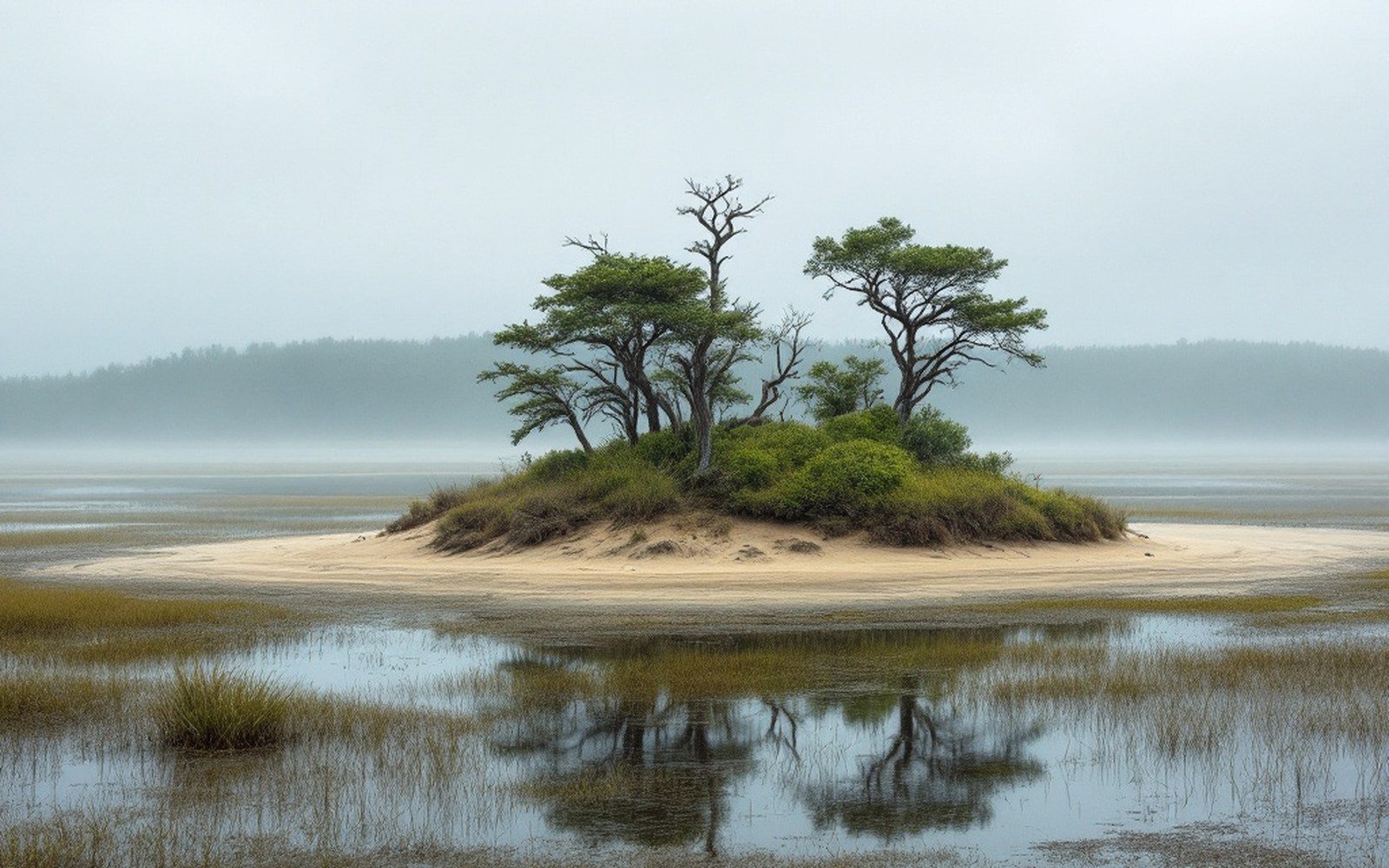
The barrier islands work as a migration hotspot partly because of what they are geologically. Barrier islands migrate landward over time, rolling over themselves as sea level and storm energy push sand from the ocean face to the backside, and their impermanence is exactly what makes them valuable habitat: they are perpetually disturbed, perpetually creating new expanses of bare wrack and exposed flat, the microhabitats that shorebirds require. A stable, vegetated beach is less useful to a migrating knot than a fresh overwash flat still glistening at low water.
The Virginia Coast Reserve, managed by the Nature Conservancy, holds the largest expanse of undeveloped barrier island coastline on the East Coast of the United States. Most of these islands have no road access and no permanent habitation, which means the birds that use them are not habituated to human presence and the habitat has not been rearranged by the demands of beach management. The contrast with developed barrier islands to the north is audible as much as visible: a September morning on a Virginia reserve island is defined by wind and tern calls and the sound of curlew.
The Chincoteague refuge, on the Virginia (southern) end of Assateague, is the more accessible end of the same system — managed impoundments alongside natural overwash flats, birded heavily enough that the Delmarva Peninsula records some of the highest shorebird counts along the mid-Atlantic coast during peak passage. The Atlantic flyway shorebird survey — coordinated through the International Shorebird Survey and partner programs — tracks long-term trends across these stops, and the numbers for several species show declines that roughly track reduced horseshoe crab egg availability and Arctic habitat compression.
Places to hold in mind
Assateague Island
barrier island split between Virginia and Maryland; Virginia end is largely managed as Chincoteague National Wildlife Refuge
Chincoteague NWR
managed refuge on Assateague's southern (Virginia) portion; impoundments and flats both
Back Bay NWR
southeastern Virginia; winter snow goose and waterfowl concentration
False Cape
undeveloped coastal state park south of Back Bay, accessible only by water or trail from Back Bay
Virginia Coast Reserve (Nature Conservancy)
largest undeveloped barrier chain on the U.S. East Coast
What the count reveals
To count migrants at a coastal pinch point is to take the pulse of a system that extends from the Canadian tundra to the coasts of South America. A low count of red knots in October is not a local observation; it is a data point in a hemispheric argument about what is happening in breeding habitat thousands of miles away. The Virginia barrier islands do not merely attract birds; they reveal them, making visible a population dynamic that would otherwise be distributed invisibly across an ocean of air.
This is what the coast means as a birdwatcher's landscape: not just numbers, but legibility. A fallout morning on Assateague or a November afternoon at Back Bay turns the diffuse, invisible force of migration into something you can see counted and assessed in long-term survey data. The barrier island sits at the end of a continent's worth of ecological apparatus, and whatever the apparatus is producing, the island shows you.
Barrier islands migrate landward. Anything fixed on one is on a schedule, whether it was designed that way or not.