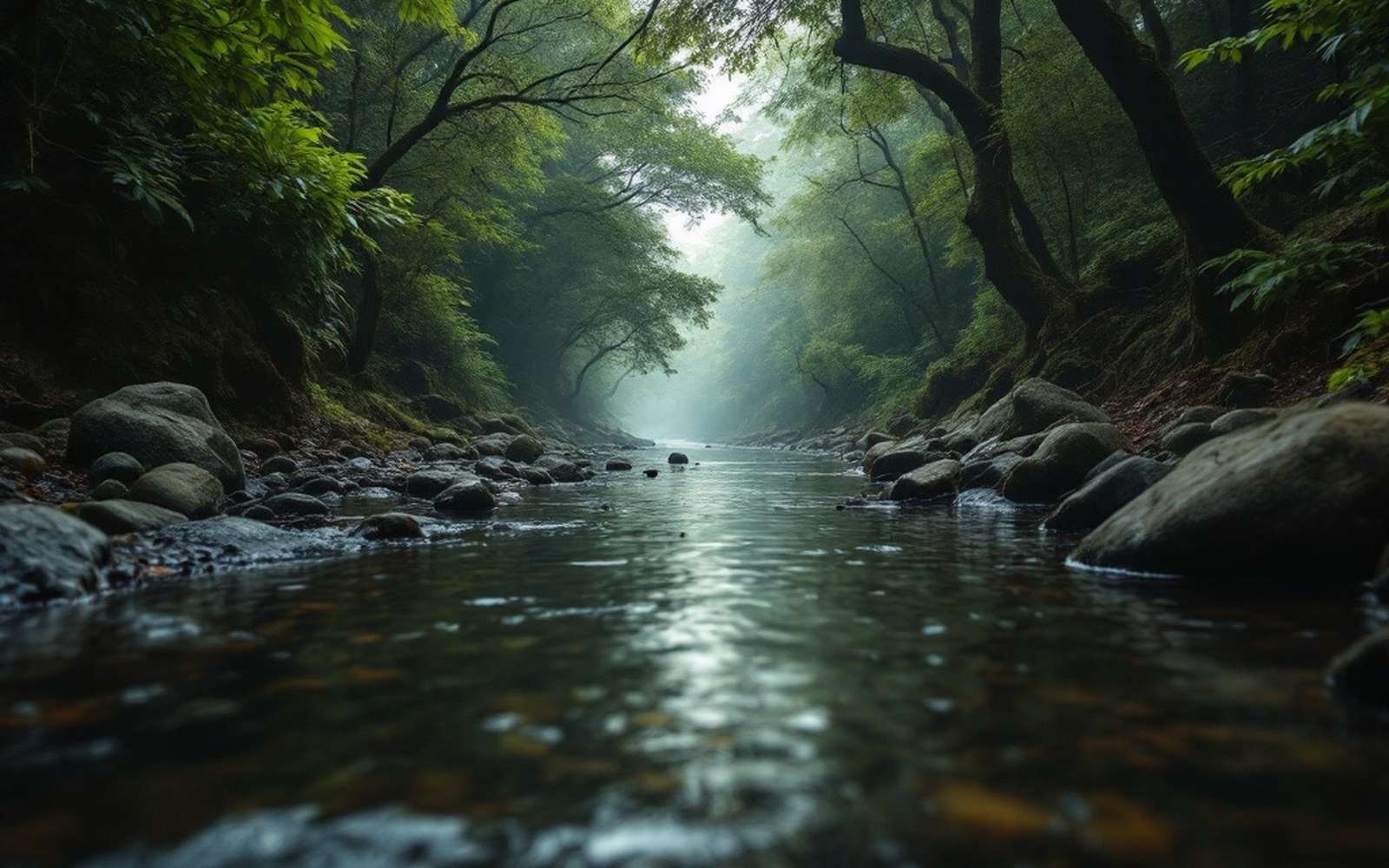
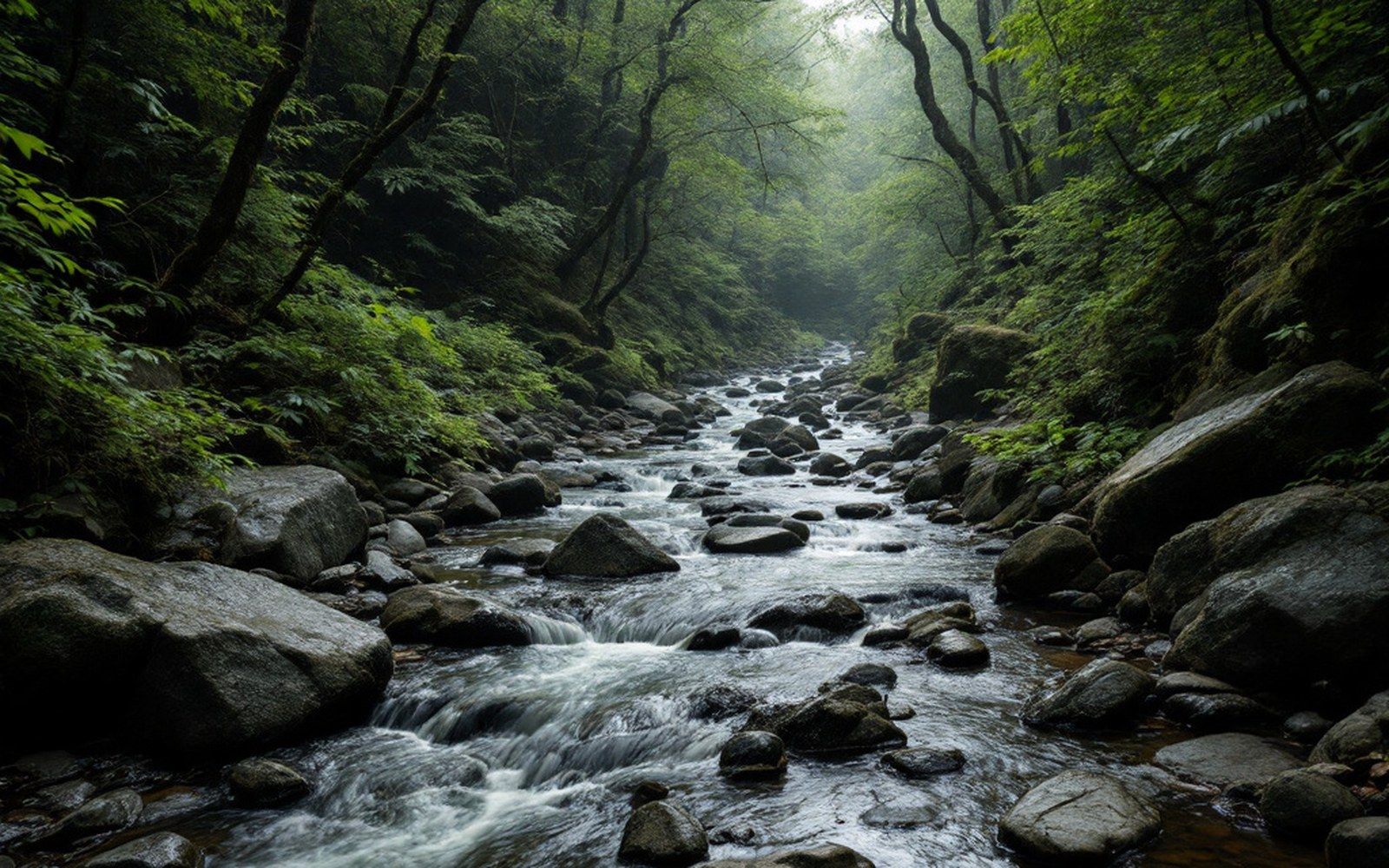
A tree on a streambank is not scenery. It is the reason a cold-water fish can be here at all.
Shade is infrastructure. A reach that loses its bankside trees warms measurably inside a single season.
The physics of a shaded stream
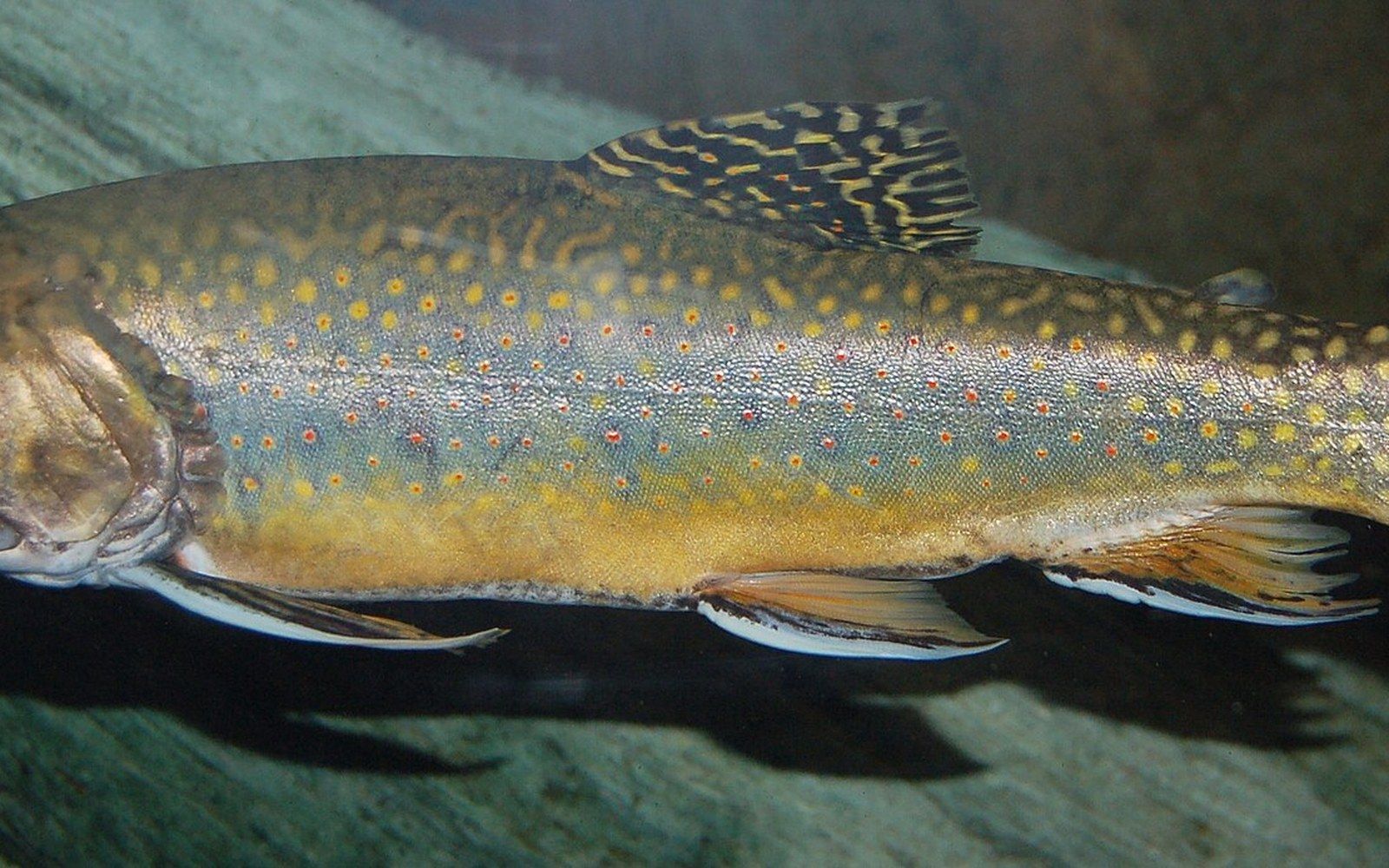
Water temperature is governed more by sunlight than by air temperature. A headwater stream running through intact riparian canopy — the corridor of trees rooted close enough to arch over the water — can stay several degrees cooler on an August afternoon than an adjacent open-channel reach carrying the same source water. Those degrees are not marginal. Brook trout, Virginia's only native salmonid, need summer temperatures that stay reliably below about 68°F. Above that threshold, dissolved oxygen drops, metabolic stress rises, and spawning success collapses. The canopy is not decoration; it is a refrigeration system built from roots, limbs, and leaf litter.
The mechanism runs in both directions. Overhanging trees intercept solar radiation before it can warm the water surface. Their roots hold banks together, preventing the channel widening that exposes more water to open sky. Fallen leaves become invertebrates — caddisflies, stoneflies, mayflies — which become trout food. Remove the trees and you do not simply raise the temperature; you collapse several interlocking systems at once.
Key relationships
Riparian canopy → solar interception → stream temperature → brook trout habitat suitability
Bank roots → channel shape → surface-area exposure to sun
Leaf litter → aquatic invertebrates → cold-water fish forage base
Hemlock loss (adelgid) → canopy gap → temperature rise in historically coldest reaches
Shade, doing the work.
What happens when the canopy goes
Virginia's cold headwater streams sit mostly in the Ridge and Valley and Blue Ridge physiographic provinces, in landscapes where logging, road-building, and conversion to pasture have repeatedly opened stream corridors. The Virginia Department of Wildlife Resources has documented temperature increases in deforested reaches that push native brook trout out of sections they once held, compressing the population into smaller, higher, cooler fragments. A stream does not have to be impounded or polluted to lose its cold-water fish; the trees simply have to come down long enough for summer to do its work.
Agricultural streams in the Valley present a particular case. Grazing animals compact banks and hold stream margins open; without fencing and replanted buffer strips, summer water temperatures in grazed sections can run significantly warmer than forested headwaters feeding the same watershed. The brook trout does not move freely between them. It retreats uphill until it runs out of elevation.
Climate change sharpens the problem. Mean summer air temperatures across the Appalachians are trending warmer, which raises the baseline that the canopy has to compensate for. Models produced through the Chesapeake Bay Program's watershed work project that suitable cold-water habitat for brook trout in Virginia could contract substantially by mid-century under moderate warming scenarios — not because the streams dry up, but because shade alone cannot hold the thermal line against a sustained shift in the regional climate.
Canopy as a management decision
The practical consequence is that a harvest decision made on a ridge well back from a stream has a reach that extends into the water below it. Virginia's forestry best management practices include buffer guidelines for logging operations near perennial streams; their effectiveness depends on width, species composition, and how quickly regenerating vegetation closes the canopy gap. A twenty-foot shrub strip and a mature hemlock gallery are not equivalent, and the interval between harvest and canopy closure is measured in years during which summer heating runs unchecked.
Numbers worth pulling
Brook trout upper thermal tolerance: approximately 68°F (20°C) sustained summer temperature
Hemlock woolly adelgid: introduced invasive; widespread across Blue Ridge canopy
Eastern hemlock (Tsuga canadensis) complicates the picture further. Hemlock is the dominant canopy species on many of Virginia's coldest stream reaches, and hemlock woolly adelgid, an introduced insect, has killed or compromised hemlock stands across much of the Blue Ridge and adjacent ranges. Where hemlock dies and no equivalent dense-canopy species replaces it quickly, stream temperatures climb. Forest managers treating adelgid-affected stands with systemic pesticides or biocontrol are also, functionally, managing water temperature.
The walker who sees a wooded stream and a clear one side by side is seeing two different thermal regimes. One sustains brook trout, native crayfish, and a full invertebrate community; the other runs warm enough for species that can tolerate warmer water, which in Virginia's highlands means it is running too warm for most of what belongs there.