A Woodpecker That Requires Fire to Keep Its Habitat
Where the pines grow old and the understory stays open, a small woodpecker drills into living wood — and the stand it needs can only be maintained with flame.
The bird nests in living pine, and living pine only stays open if something burns underneath it.
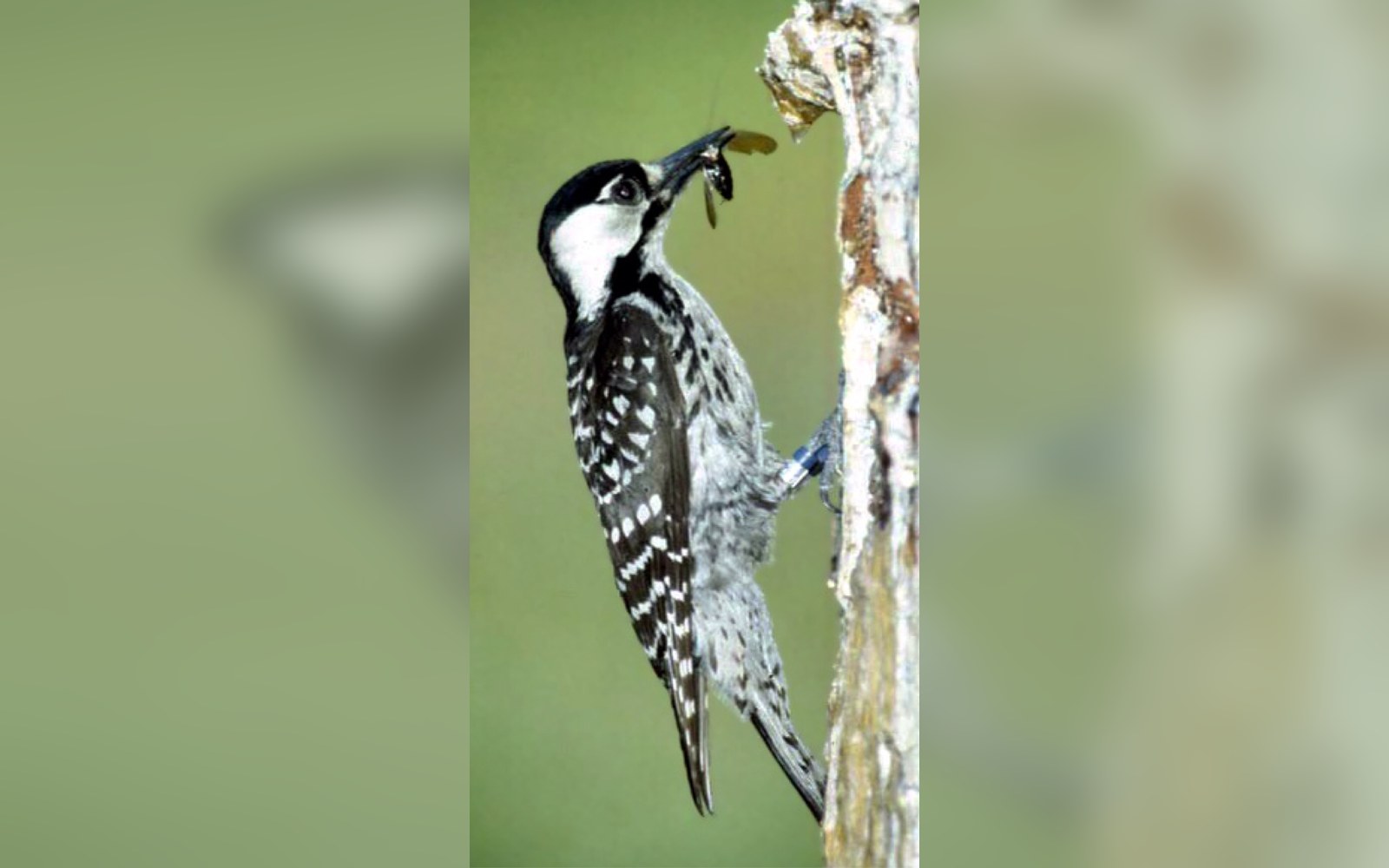
The red-cockaded woodpecker is not a particularly striking bird on first glance: black and white ladder-back, white cheek patch, and a thin stripe of red on the male's head so easily missed that many field observers never see it. What is striking is where it lives. Leuconotopicus borealis excavates its roost and nest cavities exclusively in living pines, working through the outer bark into heartwood that has been softened by red heart fungus (Phellinus pini). A single cavity can take a bird years to complete. The resin that bleeds from the surrounding sapwood — which the birds actively encourage by pecking small wells around the entrance — creates a sticky barrier against rat snakes and other climbing predators. No other North American woodpecker has converged on this combination of strategies, and none is so narrowly tied to a single forest structure.
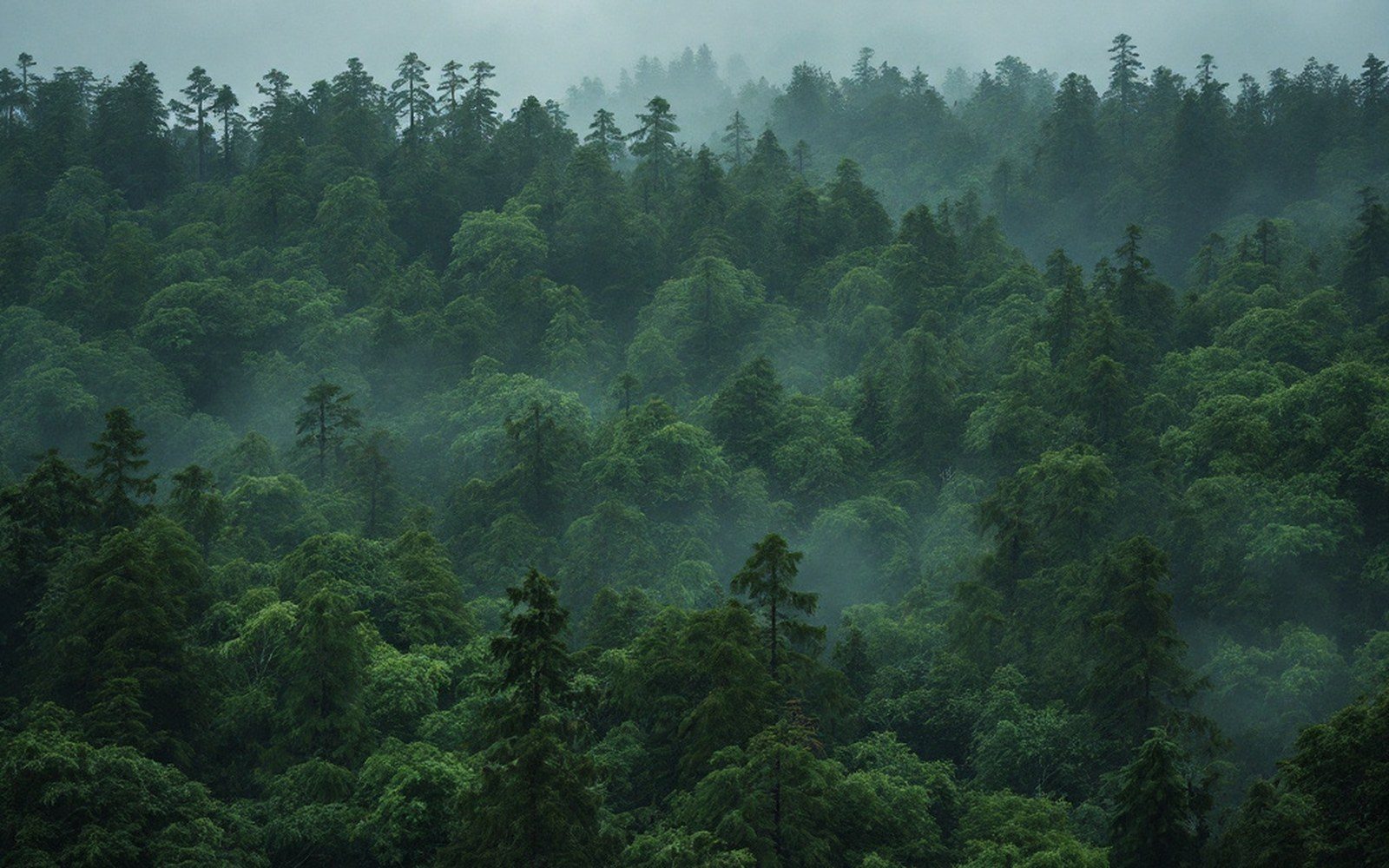
That structure is the longleaf pine savanna: widely spaced, old-growth or near-old-growth pines over a ground layer of wire-grass and bluestem kept open enough that sunlight reaches the forest floor. Longleaf once covered an estimated ninety million acres of the southeastern coastal plain. Less than three percent of that original extent remains as intact savanna today. Virginia sits at the northern edge of the bird's historical range, and the population here — concentrated in a cluster of southeastern counties and on Fort Pickett in Nottoway County — has always been a peripheral one, but it is genetically significant and biologically valid.
Delisted 2015.
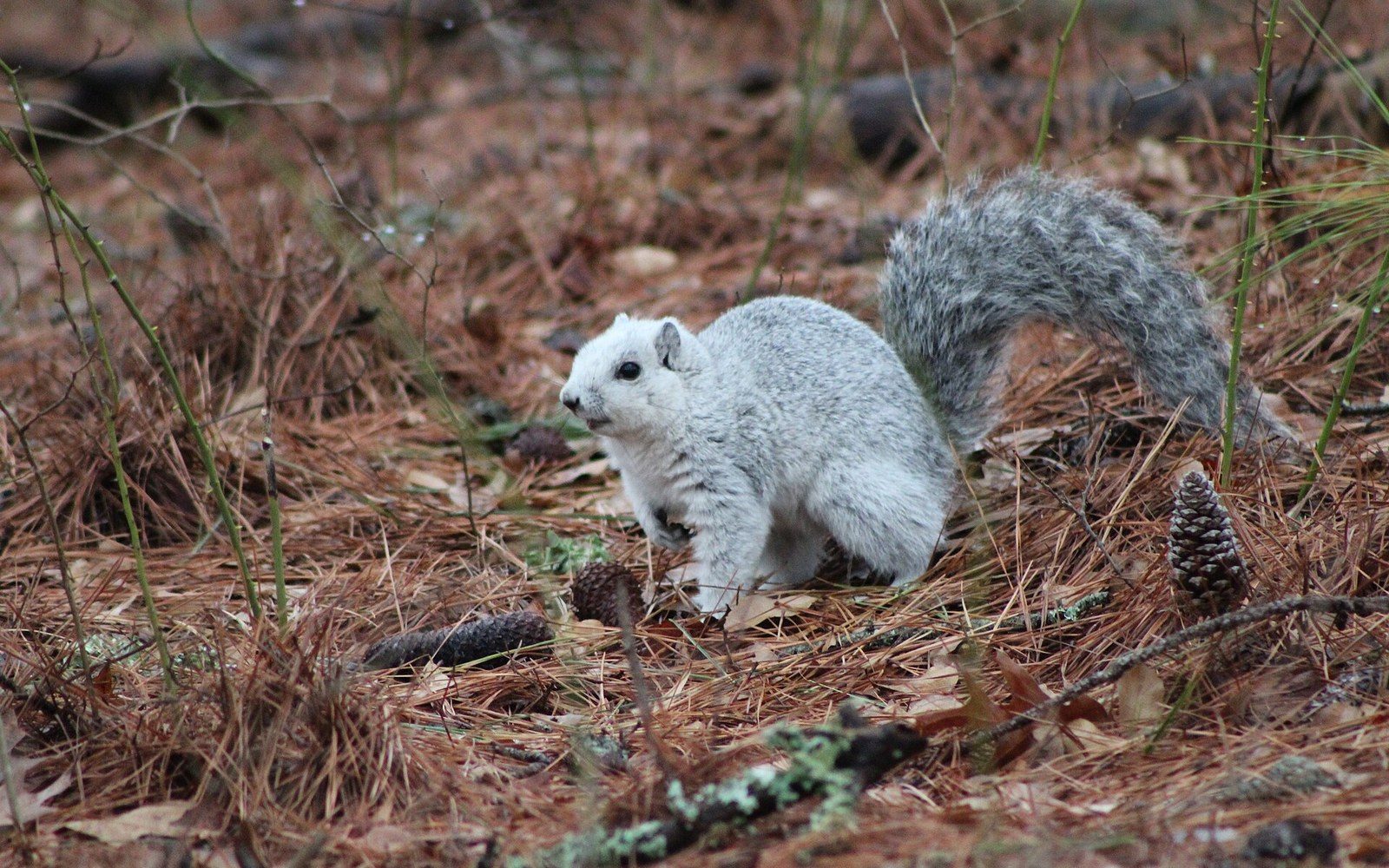
Photo: Delmarva Fox Squirrel (Sciurus niger cinereus) · Wikimedia Commons
Fire as Infrastructure
The reason longleaf savanna collapsed is not difficult to explain. Longleaf was logged heavily in the nineteenth and early twentieth centuries, and the fire that maintained the open understory was suppressed for most of the twentieth century as a matter of policy. Without periodic burning, hardwood midstory — oaks, sweetgum, red maple — closes in beneath the pines, shading out the wire-grass ground layer, eliminating the open-stand character the woodpecker requires, and eventually replacing the pines themselves. The transformation happens within decades; recovery takes far longer.
Range and status
Historical longleaf pine range: approximately 90 million acres across the southeastern coastal plain
Estimated intact longleaf savanna remaining today: less than 3% of original extent
Federal status: listed endangered 1973; downlisted to threatened October 2020
Virginia breeding population: concentrated in southeastern counties and at Fort Pickett, Nottoway County
Rangewide active cavity clusters: roughly 5,000 (early 1990s) rising to over 7,000 by status-review period
Red-cockaded woodpeckers live in cooperative family groups called clans, typically a breeding pair and one or more male helpers from previous years who assist with incubation and chick-rearing. Each clan maintains a cluster of cavity trees — sometimes called a colony site — that may be used across generations. The birds forage on the bark of living pines for beetles, ants and other insects, working the trunk surface in a way that requires open forest: a dense midstory makes the foraging trees inaccessible and the sightlines between cavity clusters unusable. Fire, in other words, is not a management amenity. It is the physical mechanism by which the habitat exists at all.
In Virginia, the Virginia Department of Wildlife Resources and the U.S. Army on Fort Pickett have both run prescribed burn programmes aimed at maintaining and expanding the open pine structure the bird requires. Fort Pickett has been one of the more consistent sites for the species in the state, in part because military training lands have maintained active burning regimes that civilian lands often abandoned. The Nature Conservancy has also worked on private lands in the region, helping to reintroduce fire to pine stands that had accumulated decades of midstory growth.
Cavity Artifice and Translocation
Because cavity excavation takes years and because mature cavity trees are themselves a limiting resource, managers have used artificial cavities — wooden inserts drilled and fitted into pine boles — to accelerate habitat availability and facilitate translocation. The technique, developed and refined over decades of recovery work in the Southeast, allows biologists to move birds from source populations into areas where natural cavities are scarce but the surrounding pine structure is adequate. Artificial cavity inserts have been a documented tool in red-cockaded woodpecker management since at least the 1980s and have become standard practice on recovery sites across the range.
A substantial bear population sits within an hour of one of the most densely settled stretches of the coast.
Translocation and cavity provisioning together make it possible to establish or reinforce a clan cluster faster than natural colonisation would allow, which matters on a landscape as fragmented as Virginia's coastal plain. The stands that remain are often separated by development, agriculture or second-growth forest inhospitable to the species. A bird dispersing naturally across that landscape faces long odds.
Federal Listing and the State of Recovery
The red-cockaded woodpecker was among the first species listed under the Endangered Species Act when it passed in 1973, and it remained on the federal endangered list until 2020, when the U.S. Fish and Wildlife Service downlisted it from endangered to threatened — a change that reflected genuine population gains at managed sites across the range, particularly on federal lands in the Carolinas and Florida. The southeastern rangewide count had climbed from roughly five thousand active cavity clusters in the early 1990s to over seven thousand by the time of the status review, according to the recovery documentation.
Virginia's population remains small and peripheral, and the downlisting did not resolve the fundamental challenge: longleaf pine savanna does not restore itself, and the burning programme that maintains it must be sustained year after year. A stand missed for a single decade can require extensive mechanical treatment — chainsaw work to reduce the accumulated midstory — before fire can be safely and effectively reintroduced. The window in which a fire burns coolly enough to maintain the ground layer without damaging the pines is also a narrow one, typically late winter into early spring before the growing season begins.
Key ecological terms
Red heart fungus (Phellinus pini)
heartwood decay that makes living pine soft enough to excavate; essential to cavity creation
Clan
a red-cockaded woodpecker family group: breeding pair plus male helpers from prior years
Colony site / cavity cluster
a group of roost and nest trees maintained and used across generations by one clan
Prescribed burn window
typically late winter to early spring, before growing season, when fire temperature is low enough not to damage mature pines
What Remains
Standing in a well-managed longleaf stand in late winter — the wire-grass tawny and flat, the pines open overhead, the ground carrying the faint char of last season's burn — it is possible to understand why this landscape produces species found nowhere else. The red-cockaded woodpecker is the most demanding indicator of whether the management is actually working. Its presence means the fire went in on schedule, the midstory stayed back, the cavity trees remained standing, and the clan was left with enough connected forest to forage and breed. Its absence means one or more of those things failed.
The bird is not charismatic in the way a raptor is charismatic. It is small, wary and easily overlooked. But what it asks for — old pines, open ground, regular fire — is a summary of everything that is difficult about restoring an ecosystem that people spent a century systematically dismantling. The burning programme is not a concession to the woodpecker. It is what the landscape is supposed to do.