An Arthropod Older Than the Flyway That Depends on It
Every May, an animal that has barely changed in 450 million years hauls itself onto Atlantic beaches to breed — and the shorebirds timing their migration to that moment have no margin if it fails.
The Oldest Transaction on the Coast
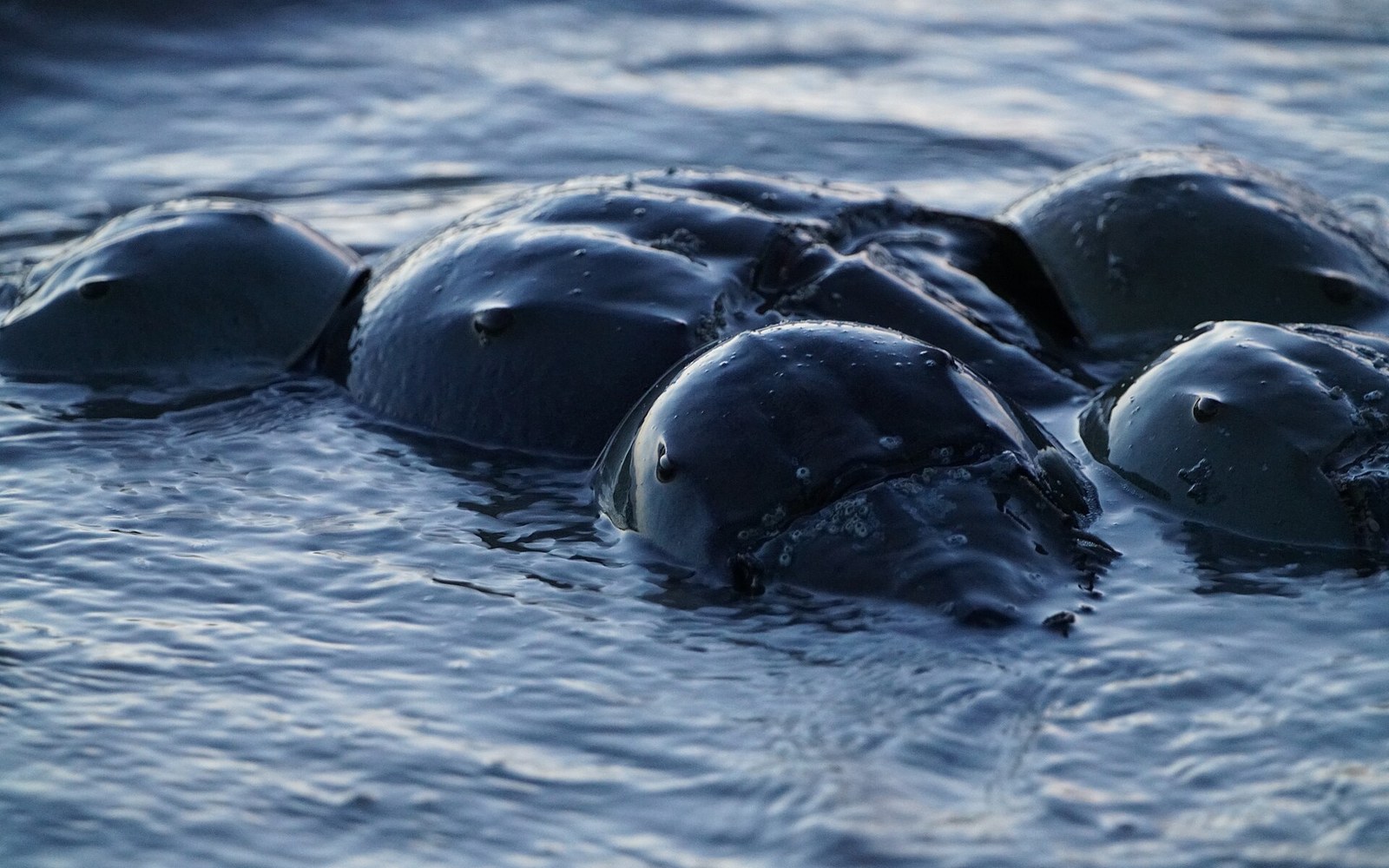
Horseshoe crabs are not crabs. Limulus polyphemus is a chelicerate, more closely related to spiders and scorpions than to anything with gills and claws in a trap on the dock. Its lineage predates the Atlantic Ocean, predates flowering plants, predates dinosaurs by a wide margin. The animal crawling across the wrack line at Assateague in May is recognizably the same creature that crawled across Devonian seafloors. The shell — technically a prosoma — is a hinged dome of chitin. The tail, called a telson, steers rather than stings. Turn one over and you see something that looks less like seafood and more like engineering: five pairs of walking legs, a pair of chelicerae for passing food to the mouth, book gills fanning the water. The blue-green blood, colored by hemocyanin rather than hemoglobin, is among the most medically valuable biological substances on the planet — a property that would eventually bring its own problems.
Come spring, mature females move inshore on high tides around the full and new moons in May and June. Males aggregate offshore first, then follow. On the open beaches of the Delmarva coast — Assateague, Chincoteague, and the adjacent Virginia barrier islands — females drag one or more males behind them through the shallow wash and deposit clusters of small green eggs just below the sand surface, sometimes thousands of eggs in a single nest. One female may spawn multiple times across the season. The eggs that wash free or are exposed by wave action are the mechanism that feeds a continent's worth of birds on a deadline.
Key numbers
~450 million years
approximate age of the horseshoe crab lineage (Ordovician origin)
2014
year red knots (Calidris canutus rufa) were listed as threatened under the U.S. Endangered Species Act
Two-week window
approximate time shorebirds have at Atlantic stopover sites to accumulate fat for Arctic breeding grounds
Tierra del Fuego
southern terminus of red knot migration, establishing the full length of the flyway
One pinch point.
Calories on a Schedule
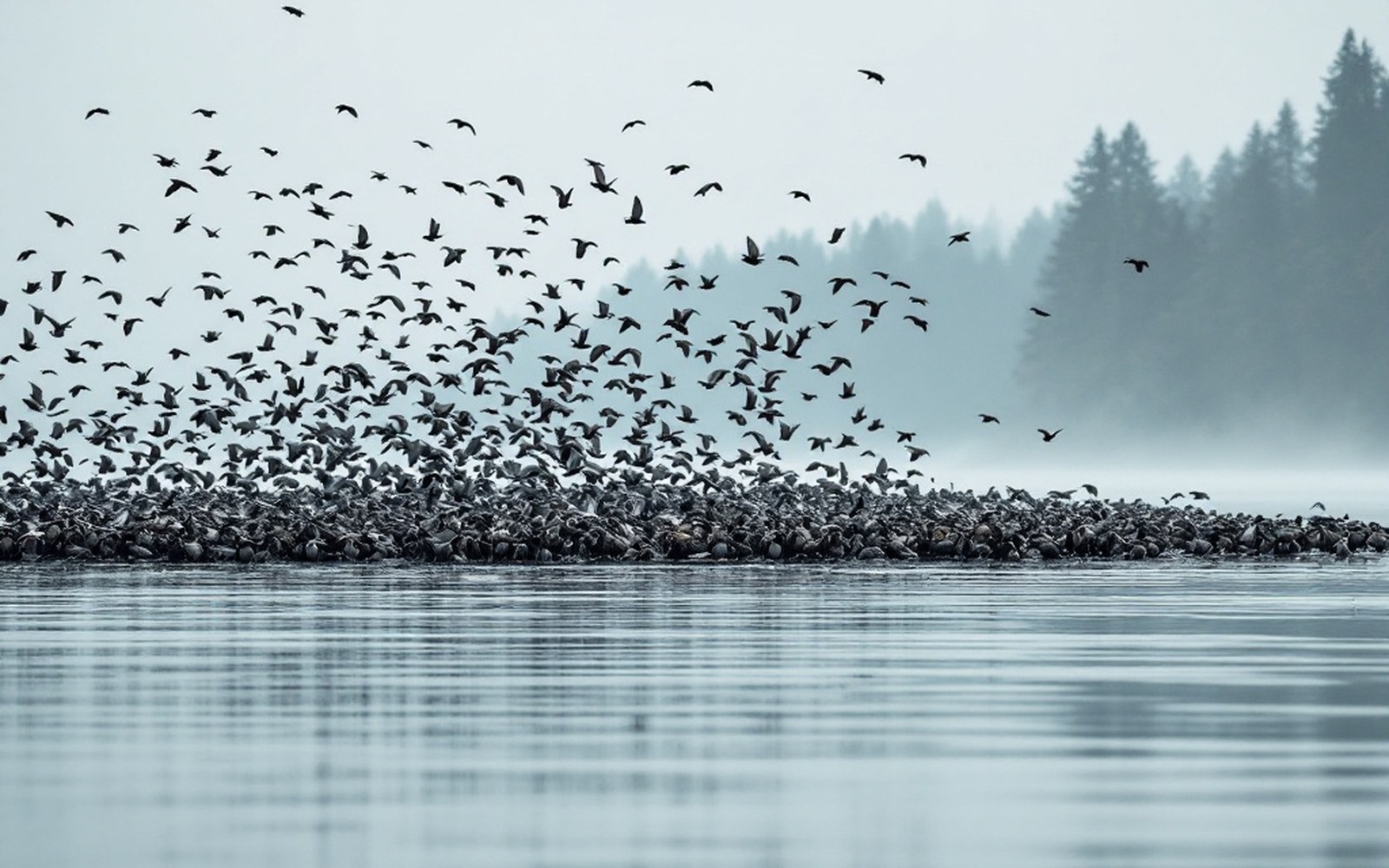
The birds in question are shorebirds completing the northern leg of the Atlantic flyway: red knots, ruddy turnstones, sanderlings, semipalmated sandpipers. They have flown from wintering grounds in South America — in the case of red knots, from Tierra del Fuego — and they need to reach Arctic breeding grounds with enough body fat to reproduce almost immediately on arrival. Delaware Bay holds the largest horseshoe crab spawning aggregation on the East Coast and has historically been the critical refueling stop, but the flyway runs the full length of the barrier-island coast, and Virginia beaches are part of the same calculus.
The arithmetic is unforgiving. Red knots, assessed by the U.S. Fish and Wildlife Service, were listed as threatened under the Endangered Species Act in 2014, in part because intensive horseshoe crab harvests on the Atlantic coast had reduced egg availability during the critical stopover window. A bird that arrives underweight and cannot double its mass in two weeks will not survive the final push north, and will not breed. The link between crab spawning and knot survival is not ecological speculation — it has been documented by body-mass studies tracking birds at Delaware Bay and along the Virginia coast across multiple decades.
What connects what
Horseshoe crab spawning season
full and new moon high tides, May–June
Critical shorebird stopover
same window, Delaware Bay and Virginia/Delmarva barrier-island coast
Medical use: Limulus amebocyte lysate (LAL)
derived from horseshoe crab blood, used to test drugs and devices for bacterial endotoxin contamination; this creates a second, non-food harvest pressure on the same population
Horseshoe crab populations had been under commercial pressure for decades: harvested for bait in the conch and eel fishery, and bled for the biomedical industry, which uses Limulus amebocyte lysate (LAL) to test pharmaceuticals and medical devices for bacterial contamination. The Atlantic States Marine Fisheries Commission manages the stock through a coast-wide stock assessment and harvest quota system, with specific protections during spawning season and in designated refuge areas. Virginia's barrier island beaches fall within the managed zone.
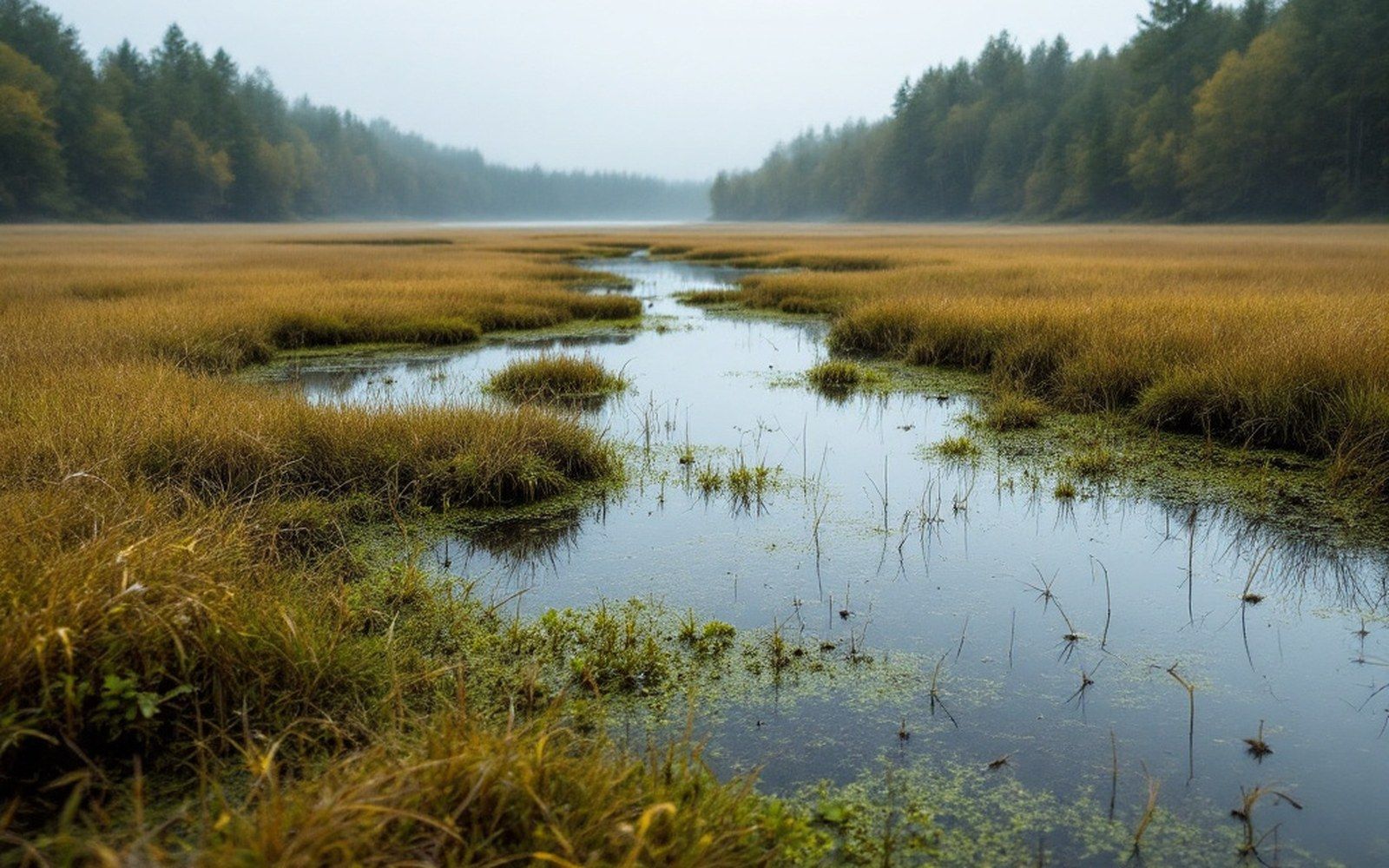
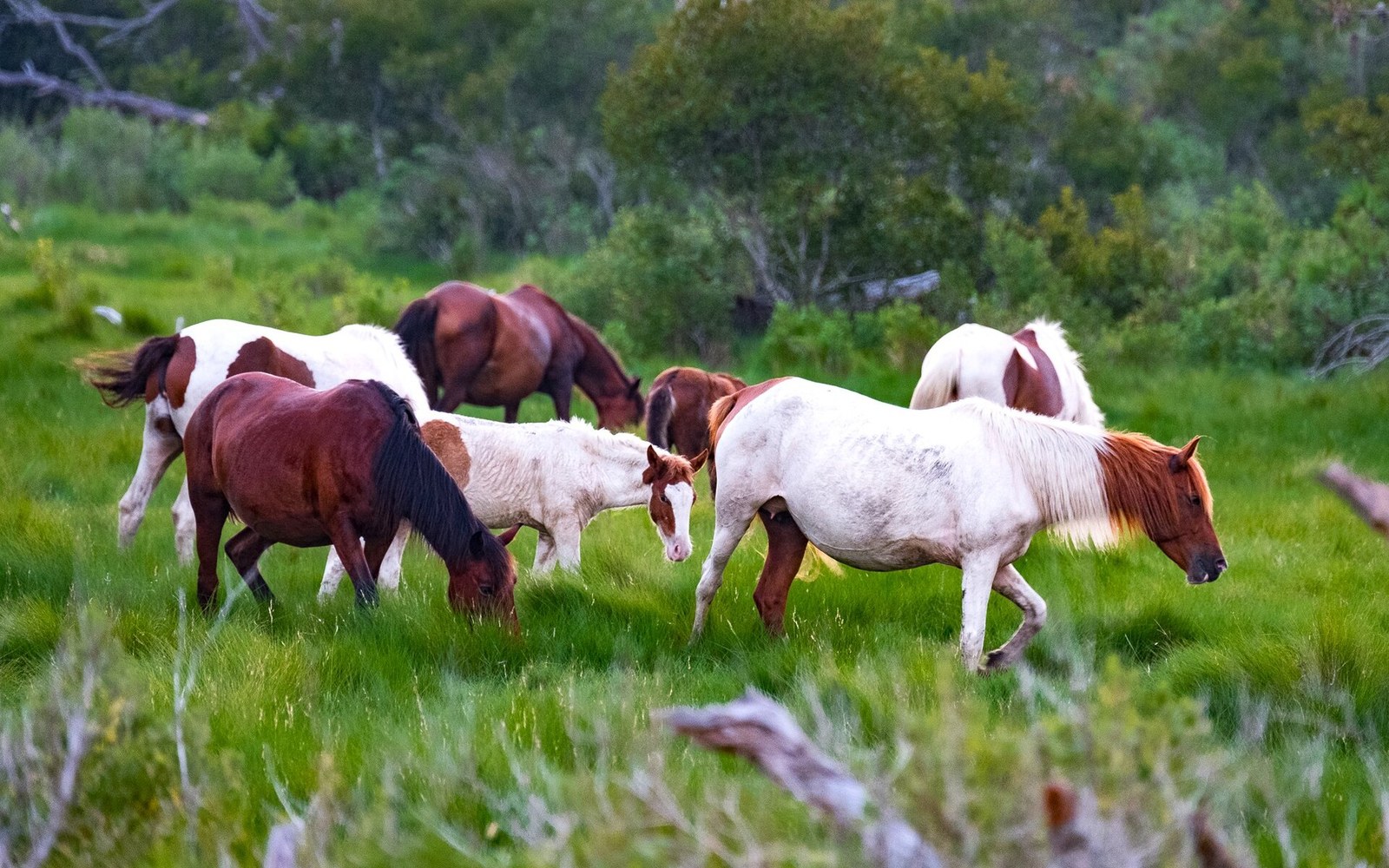
Marsh like this is a fuel stop. The birds using it this week are a thousand miles away by the next one.
Spawning surveys along the Virginia coast, conducted annually as part of broader Atlantic monitoring, track female density and egg availability, pairing the data against shorebird counts to watch the timetable hold or slip. What the surveys show is a system under tension but still functional: crabs still spawn, birds still arrive, and in good years the fat accumulates fast enough. What the surveys also show is how little redundancy exists. The horseshoe crab is ancient and nearly indestructible in geologic time. The synchrony it has built with birds that evolved millions of years after it did is not. That synchrony runs on a two-week window in May, and if the eggs are sparse, the birds leave thin, and the Arctic receives fewer knots than it needs.