The Chincoteague Volunteer Fire Company runs a population-control mechanism. The swim is the spectacle; the auction is the function.
The herd is held at a set number, which is what makes the annual swim a management operation rather than a spectacle.
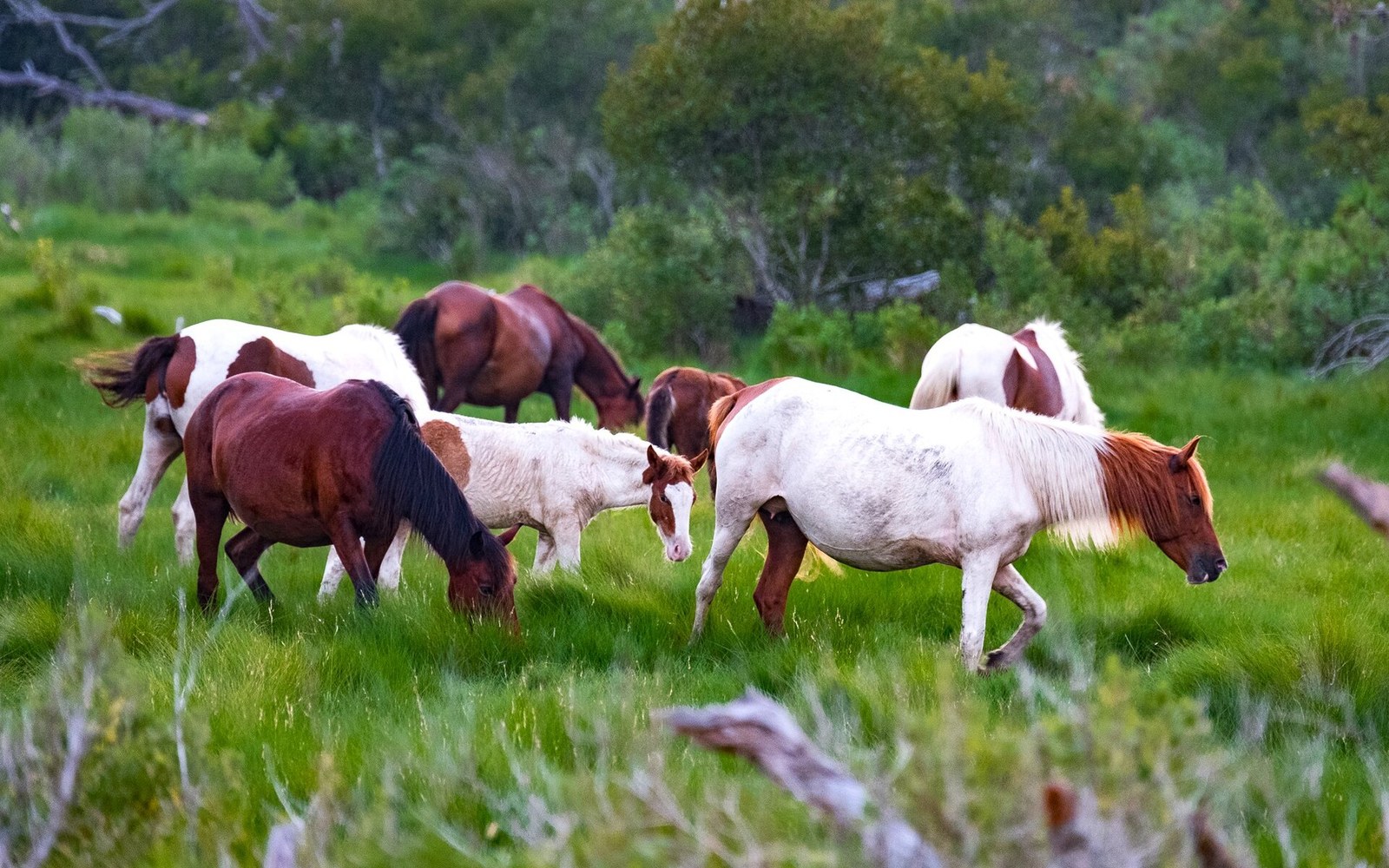
Photo: Virginia Chincoteague Ponies · Wikimedia Commons
A Counted Herd on a Federal Refuge
The ponies on Assateague Island are not wild in any strict biological sense. They live on a federal wildlife refuge, they are counted annually, and their numbers are held within a ceiling set by the U.S. Fish and Wildlife Service to prevent overgrazing of the salt marsh. The Virginia herd — the Maryland side is managed separately by the National Park Service — is maintained at roughly 150 animals. That figure is not a population estimate; it is a target, reviewed against the carrying capacity of the refuge's vegetation.
The animals themselves are small, stocky, and adapted to a diet of saltmarsh cordgrass, Spartina alterniflora, which gives them a bloated appearance from the high water and salt content of the grass. They are not a breed in the studbook sense, though they have been selectively shaped by more than a century of management. Genetic analysis has not produced a tidy origin story: the most plausible explanation is that they descend from horses brought to the island in the seventeenth century by mainland farmers evading livestock taxes and fencing laws, though no single documentary source closes the case.
Key numbers
Virginia herd ceiling: approximately 150 animals, set by U.S. Fish and Wildlife Service
Annual swim: held every July since 1925
Managing body: Chincoteague Volunteer Fire Company (Virginia herd); National Park Service (Maryland herd)
Every July, the Chincoteague Volunteer Fire Company rounds up the Virginia herd and drives it across the Assateague Channel to Chincoteague Island. The crossing — timed to slack tide — takes only a few minutes. What follows on the Chincoteague side is a public auction of that year's foals. Buyers take ownership of the animals and remove them from the island entirely. That removal is the point. The auction keeps the herd below its ceiling by exporting the annual increment of foals, so the adult population stays approximately stable from year to year.
The Fire Company has held this event since 1925, originally to raise money for firefighting equipment. The mechanism has since become the primary tool for population management on a federally managed landscape. The Service sets the cap; the Fire Company conducts the cull; the auction finances both the Fire Company and the veterinary care the herd receives year-round. It is an unusual arrangement — a volunteer civic organization acting as herd manager on a unit of the National Wildlife Refuge System — and it has persisted largely because it works and because it produces revenue that neither the refuge nor the county would otherwise have.
Chronology
Seventeenth centuryhorses likely introduced to Assateague by mainland farmers
1925Chincoteague Volunteer Fire Company begins the annual swim and auction
Presentcontraceptive management used in some years alongside the auction mechanism
Occasionally the Fire Company retires a foal back to the island rather than selling it, replacing an adult that has died. These "buybacks" let the herd maintain its number without waiting for the next breeding season. The herd also receives periodic veterinary intervention — contraceptive treatments have been used in some years to moderate foal production, reducing pressure on the auction mechanism when the herd trends high.
What the Ponies Do to the Marsh
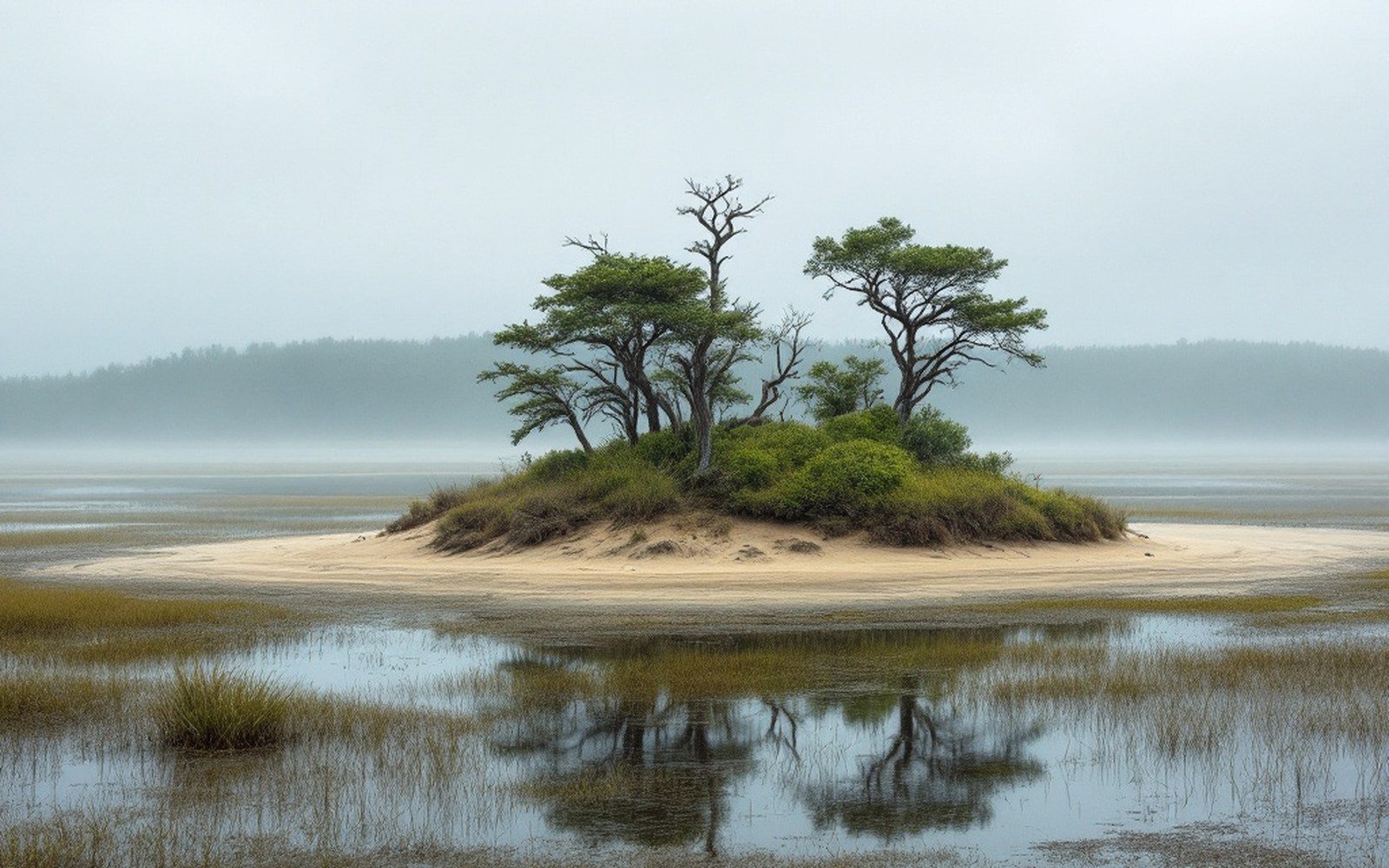
At the right density, grazing by large herbivores on barrier-island marshes is neither neutral nor simply destructive. The Assateague ponies disturb and compact soil, preferentially graze certain plant communities, and create wallows that alter drainage patterns. At the numbers the refuge currently permits, these effects are considered manageable. Let the herd grow substantially and the calculus changes: cordgrass marshes overused by grazers lose their root structure, and a barrier island with compromised vegetation is more vulnerable to every storm that crosses the Atlantic flyway corridor in autumn. The cap is, in that sense, as much about the island as about the ponies.
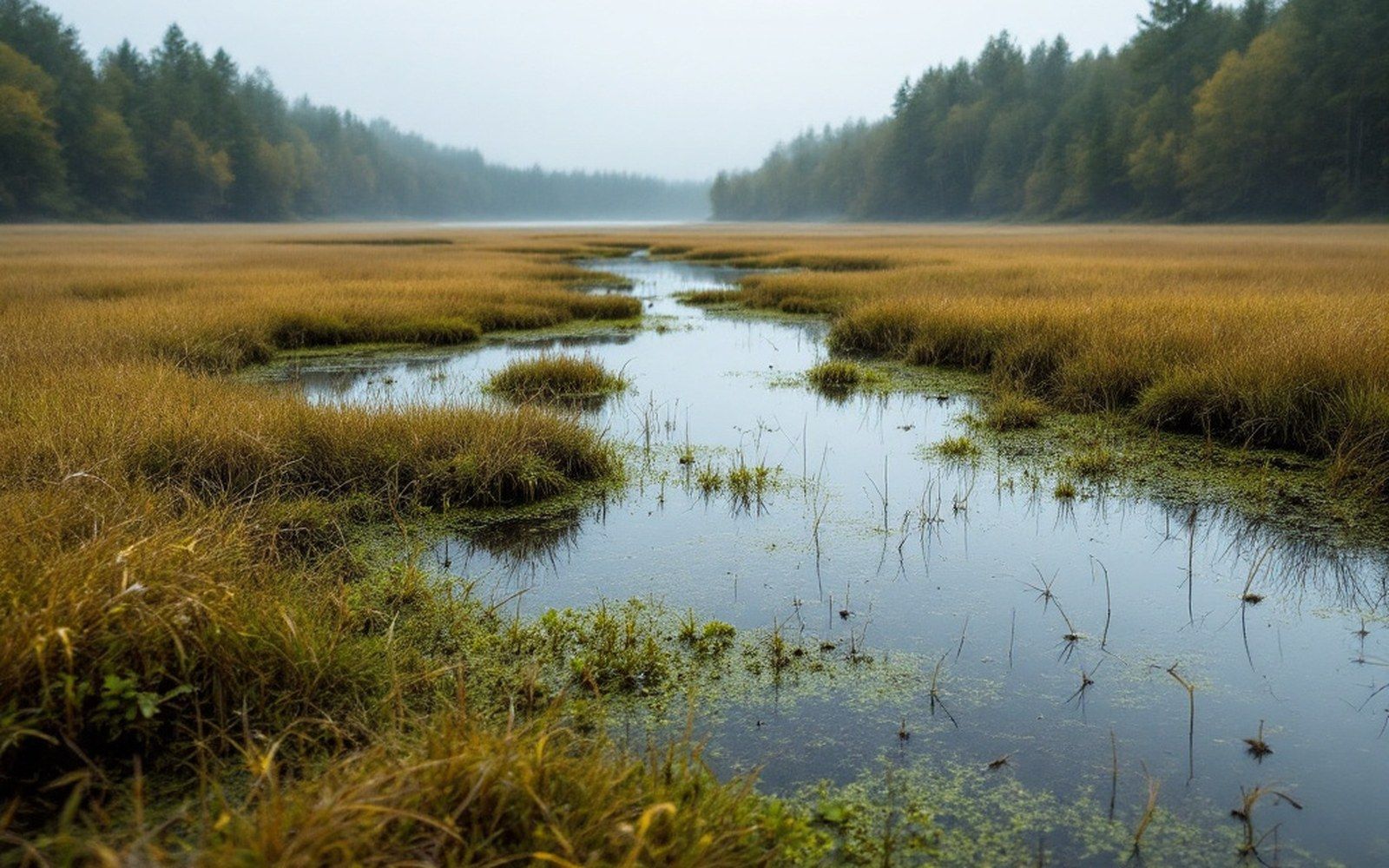
Marsh like this is a fuel stop. The birds using it this week are a thousand miles away by the next one.
That tension — between a charismatic herd, a century-old civic tradition, a federal land mandate, and a fragile barrier-island ecology — is what makes the Chincoteague ponies interesting beyond the spectacle of the swim. They are managed animals on managed land, and the management is more deliberate, and more contested, than the postcard suggests.