Stone walls, log shelters, and graded trails: the Civilian Conservation Corps shaped the infrastructure of Virginia's public lands during nine years that have not been matched since.
Shelters, walls and culverts built in the 1930s still carry the public through these places.
What the Corps Left Behind
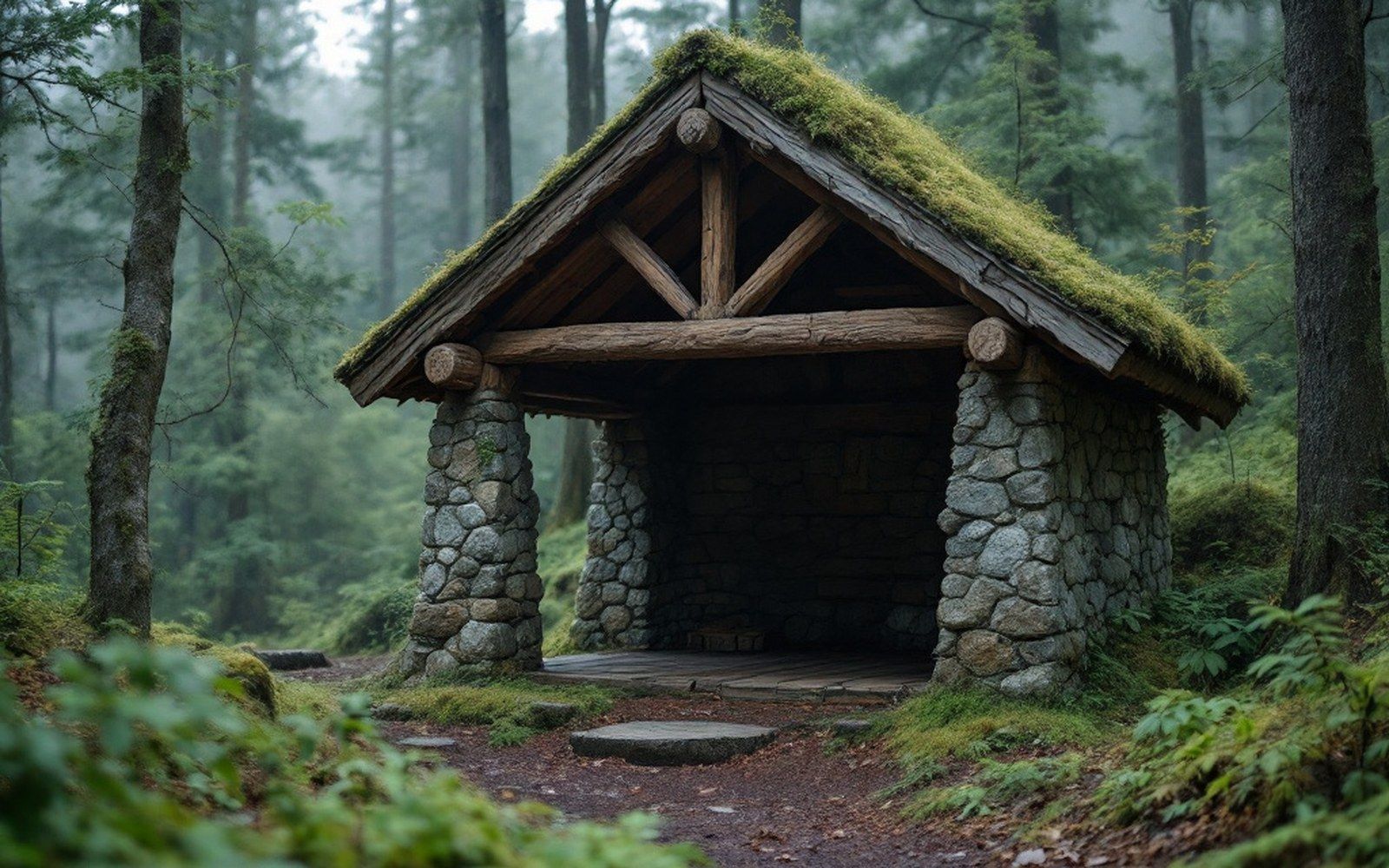
From 1933 to 1942, the Civilian Conservation Corps put young men to work on public land at a scale that still defines the experience of visiting it. In Virginia, the consequences are everywhere underfoot. The trails threading Shenandoah National Park were largely cut, graded, and surfaced by CCC enrollees. The stone walls along Skyline Drive were built by them. The wayside overlooks, the low-slung stone shelters, the steps cut into rock outcrops — the aesthetic grammar of the American mountain park was set here, with hand tools and dynamite, between the Depression and the Second World War.
The Corps operated on a national template: federal appropriations, War Department discipline, and young men drawn from unemployment rolls, most of them between eighteen and twenty-five. Congress authorized the CCC in March 1933, and the first camps were enrolling within weeks. Virginia's geography made it an early and intensive site for the programme. Shenandoah was being assembled simultaneously, with the federal government acquiring Blue Ridge land that had been farmed and logged for generations; the CCC provided both the labour and the argument for moving fast. By the mid-1930s, dozens of camps were operating across the state.
Chronology
March 1933Congress authorizes the Civilian Conservation Corps
1933–mid-1930sShenandoah land acquisition and CCC camp deployment overlap
c. 1900Chestnut blight first introduced; blight front reaches Virginia's Blue Ridge by the 1930s
1942CCC disbanded as wartime employment absorbs the workforce
Second growth.
The work was physical and specific. Stone was quarried nearby and fitted without mortar in the retaining walls that keep Skyline Drive from sliding downslope. Trails were laid to grades that drain rather than erode — a calculation that most of them have proven correct, given how much they still carry. Shelters were built at intervals along ridge routes, using chestnut and oak felled on site. Fire towers went up on summits across the western mountains. Fish hatcheries were stocked, stream banks were stabilised, and firebreaks were cleared. The CCC in Virginia also contributed to the early development of facilities at Back Bay and in the coastal tidewater, extending the programme's reach well past the mountains.
What Was Already Gone
The CCC arrived on the Blue Ridge after the American chestnut was already collapsing. The blight — a fungal pathogen introduced around 1900 — had been moving south through Appalachian forests for three decades, and by the time enrollees were splitting rails and cutting trails in Shenandoah, the chestnuts standing above them were largely dead or dying. The Corps used the timber while it was there; the shelter logs and fence posts of that era are often chestnut, which is why they have lasted. The landscape the CCC shaped was already a recovering one, not a pristine one — logged, farmed, blighted — and part of what the programme accomplished was simply making the recovery look intentional.
What the Corps built (Virginia examples)
Trails
graded, drained routes through Shenandoah; many still the primary public access
Skyline Drive stonework
retaining walls, guardrails, overlook paving
Backcountry shelters
built from on-site chestnut and oak; some still standing
Fire towers
across the western mountain provinces
Stream and bank stabilisation
extending to coastal tidewater sites including Back Bay
That context matters for reading the infrastructure now. The trails do not follow Indigenous or colonial paths in most cases; they were designed as recreational routes through a landscape being reconstituted as a park. The National Park Service's own histories note that the design philosophy aimed for a rustic naturalism — structures built to look as though the land had accommodated them — which is why the stonework reads as old even when you know the date.
The programme employed around three million men nationally before wartime labour demand ended it in 1942. What it did not resolve — and what the design philosophy quietly obscured — was who had lived on these ridges before the parks displaced them. The families cleared from Shenandoah to make the CCC's work possible were predominantly Appalachian smallholders, moved with varying degrees of consent and compensation. The homes they left behind were demolished; the infrastructure the Corps built replaced them on the same ground.
Shade is infrastructure. A reach that loses its bankside trees warms measurably inside a single season.
Walking a CCC-built trail today, you are walking something made in a specific emergency, by men who needed wages, on land that had just changed hands under duress. The stonework is genuine craft. So is the history beneath it.