A fungus arrived around 2009 and bats have not recovered
White-nose syndrome swept through Virginia's hibernating bat populations in a few winters. The numbers that came out the other side are fractions of what went in.
What the fungus does
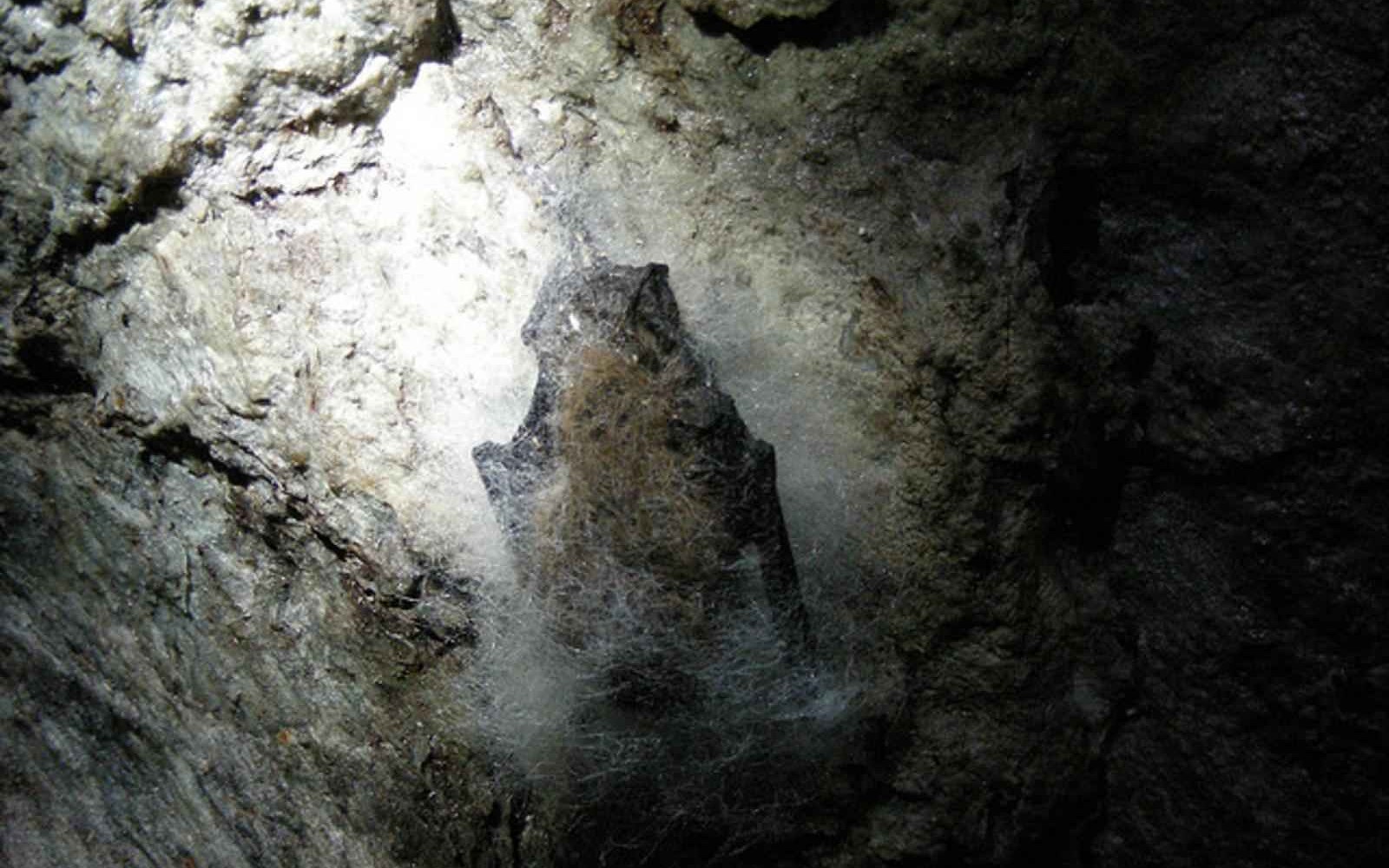
Pseudogymnoascus destructans — the pathogen behind white-nose syndrome — was first confirmed in a New York cave in the winter of 2006–07. It reached Virginia around 2009, moving predictably south and west through the cave networks of the Appalachians. The fungus is cold-loving, thriving at the temperatures that hibernating bats maintain in limestone caverns through winter. It colonises exposed skin — the muzzle, ears, wing membranes — while a bat hangs motionless and its immune system is effectively offline. The physical irritation triggers arousals: bats wake up when they should not, burn through fat reserves they cannot replace until spring insects fly, and die of starvation or exposure before the season turns. The white dusting of fungal growth on the muzzle gave the disease its name; what the name does not convey is the speed.
In some hibernacula — the caves and mines where bats aggregate in winter — populations collapsed by ninety percent or more within two or three seasons. That is not a gradual decline of the kind that conservation biology is built to address. It is closer to a crash, and the biology of the affected species makes recovery almost impossibly slow. Most hibernating bats in Virginia raise a single pup per year. A little brown bat (Myotis lucifugus) that survives to adulthood might live twenty years, but the reproductive math does not allow for rapid rebuilding of a population that has lost nine in ten individuals. White-nose syndrome has now been documented across most of the continent, with confirmed detections in more than forty U.S. states and several Canadian provinces as of recent years.
The species Virginia lost ground on
Virginia's cave-hibernating bat community includes several species that bore the full force of the outbreak. The little brown bat was once among the most common bats in eastern North America; surveys conducted in Virginia after 2009 found sites that had sheltered tens of thousands of individuals reduced to hundreds. The northern long-eared bat (Myotis septentrionalis) fared worse. It was listed as threatened under the federal Endangered Species Act in 2015 and reclassified as endangered in 2022, a trajectory driven almost entirely by white-nose syndrome. The tricolored bat (Perimyotis subflavus), small enough to be dismissed as unremarkable, has been proposed for listing as well; some hibernaculum counts show declines exceeding ninety percent from pre-outbreak baselines.
Species and status
Little brown bat (Myotis lucifugus)
once abundant, decimated at hibernacula statewide; no federal listing but severe declines
Northern long-eared bat (Myotis septentrionalis)
federal endangered status as of 2022; among the hardest hit
Tricolored bat (Perimyotis subflavus)
proposed for federal listing; hibernaculum counts down more than 90% at many sites
Indiana bat (Myotis sodalis)
already listed before 2009; white-nose syndrome compounded existing pressures
Big brown bat (Eptesicus fuscus)
relatively more tolerant of the fungus; mechanisms not fully understood
The Indiana bat (Myotis sodalis), already federally listed before white-nose syndrome arrived, was carrying a conservation debt it could not afford to add to. Virginia holds portions of its range in the Ridge and Valley province — the folded karst landscape west of the Blue Ridge — where limestone geology produces the cave systems these species depend on. Those same caves had been studied and monitored long enough that researchers possessed real pre-outbreak numbers. That documentation made the losses legible in a way that slower declines rarely are: you could see, site by site, what had been there and what remained.
The big brown bat (Eptesicus fuscus) and the eastern small-footed bat (Myotis leibii) have shown somewhat greater tolerance for the fungus, though the mechanisms are not fully understood. Survival rates among some individuals suggest that exposure does not always mean death, and research into immune response variation has raised the possibility that natural selection may, over very long timescales, produce a population with greater resistance. That is a cold comfort for species already reduced to remnants.
What came after
The decade and a half since the outbreak reached Virginia has produced research, monitoring and several experimental interventions, none of them sufficient to reverse what happened. The Virginia Department of Wildlife Resources has participated in multi-state monitoring efforts, counting bats at hibernacula through the winter season to track what remains and watch for any sign of stabilisation. Some sites appear to have reached a lower equilibrium — small populations that are neither growing nor disappearing — though the word "equilibrium" flatters what is functionally a remnant.
A substantial bear population sits within an hour of one of the most densely settled stretches of the coast.
Probiotic treatments, applying beneficial bacteria to cave surfaces or directly to bat fur to inhibit fungal growth, showed early promise in experimental trials. A vaccine, delivered by spraying roosting bats or coating cave surfaces, moved into field trials in several states after laboratory work indicated it could stimulate an immune response. Neither approach has yet demonstrated population-level recovery. The logistical problem is severe: to treat a bat population meaningfully, you must access hibernacula without further disturbing the bats, at the right moment in the hibernation cycle, across enough sites and enough winters to accumulate a measurable effect. The fungus, meanwhile, persists in cave sediments and on cave walls indefinitely, independent of any bat host.
The ecological consequences extend beyond the bats themselves. Insectivorous bats are significant consumers of night-flying insects across the warmer months. Research published in the early years of the outbreak estimated that bats provide pest-suppression services in the hundreds of millions to billions of dollars annually across North American agriculture — a figure that has been debated in its precision but not in its direction. The loss of bat biomass at this scale alters insect communities in ways that are difficult to measure and almost impossible to attribute cleanly, but the pressure those animals formerly exerted is gone from the system.
Chronology
2006–07Pseudogymnoascus destructans first confirmed in New York
~2009fungus reaches Virginia cave systems
2015northern long-eared bat listed as threatened under ESA
2022northern long-eared bat reclassified as endangered
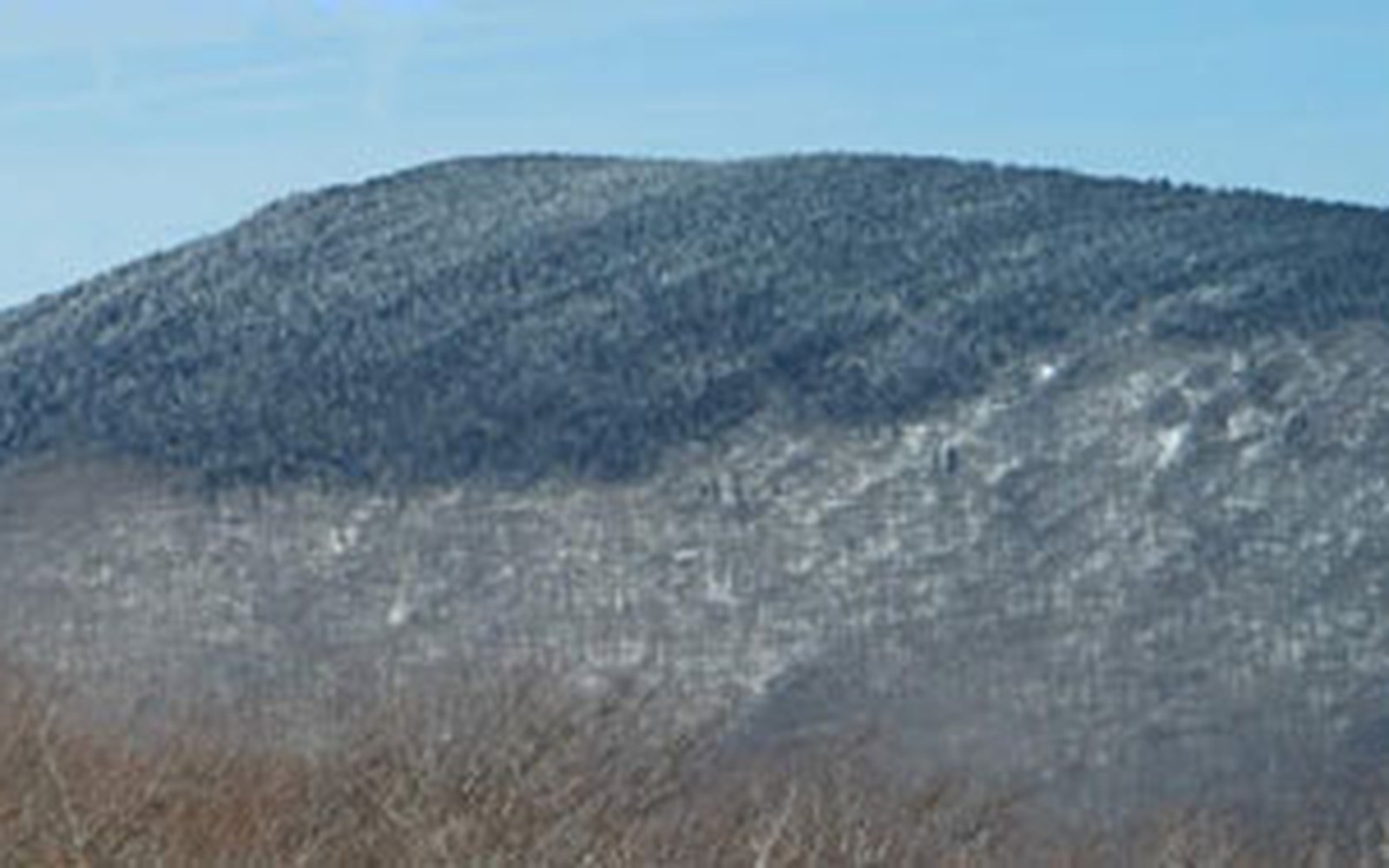
Virginia's cave landscape west of the Blue Ridge — particularly the karst of Augusta, Bath, Highland and Alleghany counties — concentrated some of the state's most important hibernacula. The Great Dismal Swamp and the Coastal Plain also hold bat populations, but the species most devastated by white-nose syndrome are the obligate cave hibernators of the mountain west of the state. Shenandoah National Park has documented the fungus within its boundaries; the park's bat monitoring reflects the broader statewide pattern.
What is absent from the landscape now is harder to see than what is present. Bat activity detectors record echolocation pulses; researchers comparing pre- and post-outbreak acoustic surveys find nights that are quieter than they should be. The insects are there. The warm evenings are there. The bats that would have been hunting them, in the numbers that were hunting them a generation ago, have not come back. There is no current indication that they will, on any timescale that fits a human reckoning of the word "recovery."