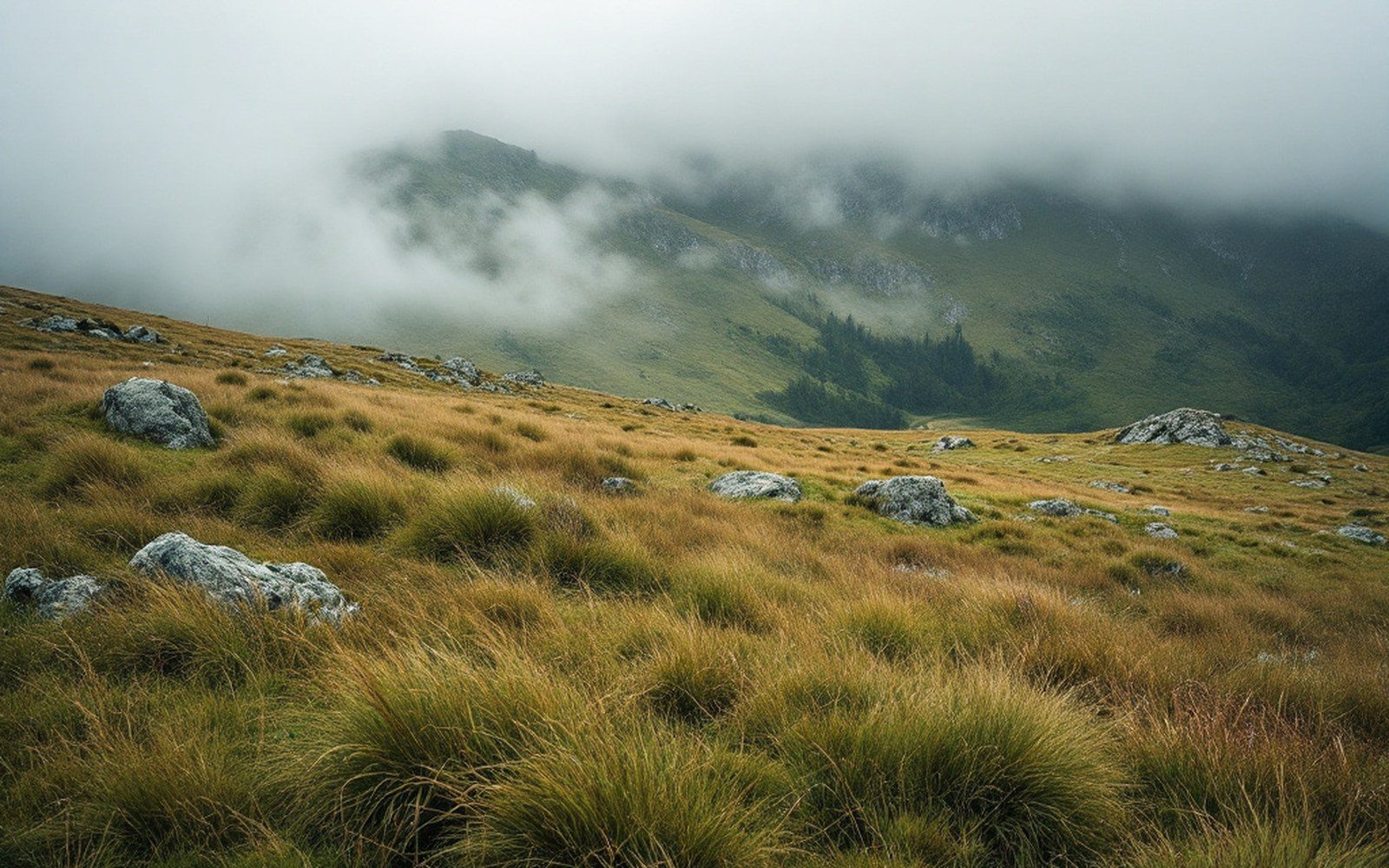
Grayson Highlands' exposed summits look primeval. They are partly managed.
The balds stay open because something keeps eating them. Remove the grazing and the shrubs close in.
The bald and what holds it
A bald, in Appalachian terms, is a treeless summit or ridge that sits well below the natural timberline — a grassland or heath opening in a landscape that, left alone, would close into forest. No one has settled the question of why Virginia's high balds exist at all. Climate, fire history, large grazing animals in the Pleistocene, and Indigenous burning have each been proposed; the likeliest answer involves several of these forces working together over thousands of years. What is clear is that once the clearing exists, succession will reclaim it unless something actively prevents it.
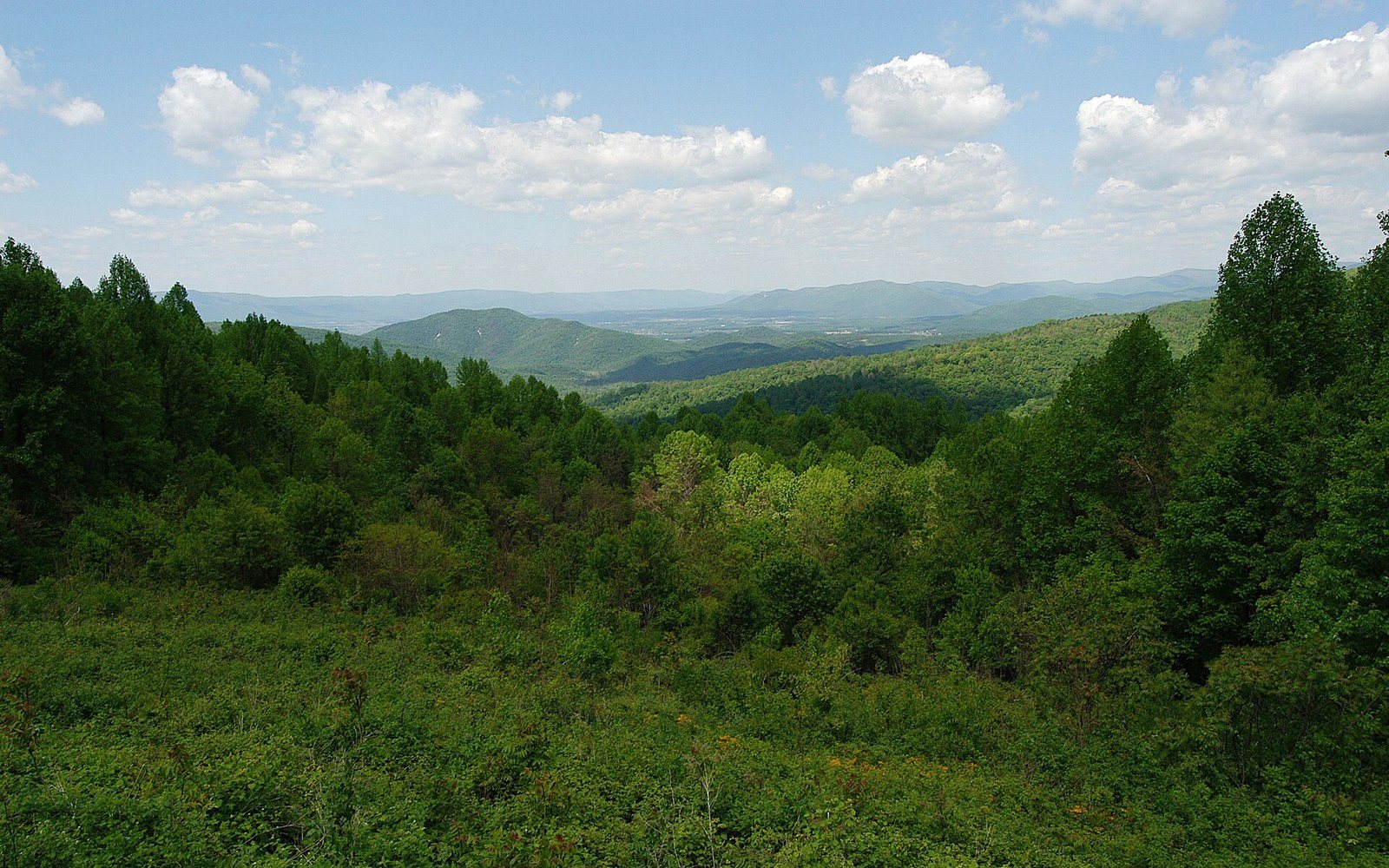
At Grayson Highlands State Park, elevation runs above 5,000 feet across much of its open ground, and Mount Rogers — Virginia's highest point at 5,729 feet — rises just to the north in the adjacent Mount Rogers National Recreation Area. The two units share a landscape: spruce-fir pockets on the upper slopes, wind-cropped hawthorn and serviceberry at the bald margins, and wide grass-and-sedge openings on the summits themselves. The views across the Black Mountains and into North Carolina are the payoff. The ecology is the story behind them.
Key species on the bald
Spreading avens (Geum radiatum)
federally endangered plant, restricted to high Southern Appalachian outcrops; benefits from open-bald conditions
Catawba rhododendron
major shrub encroacher at bald margins; checked by pony grazing
Sand myrtle
low ericaceous shrub; advances into grazed ground when pressure is removed
Dark-eyed junco
common summit nesting bird; uses both open bald and spruce edge
Northern saw-whet owl
uses the forest-bald ecotone, especially spruce-fir margins
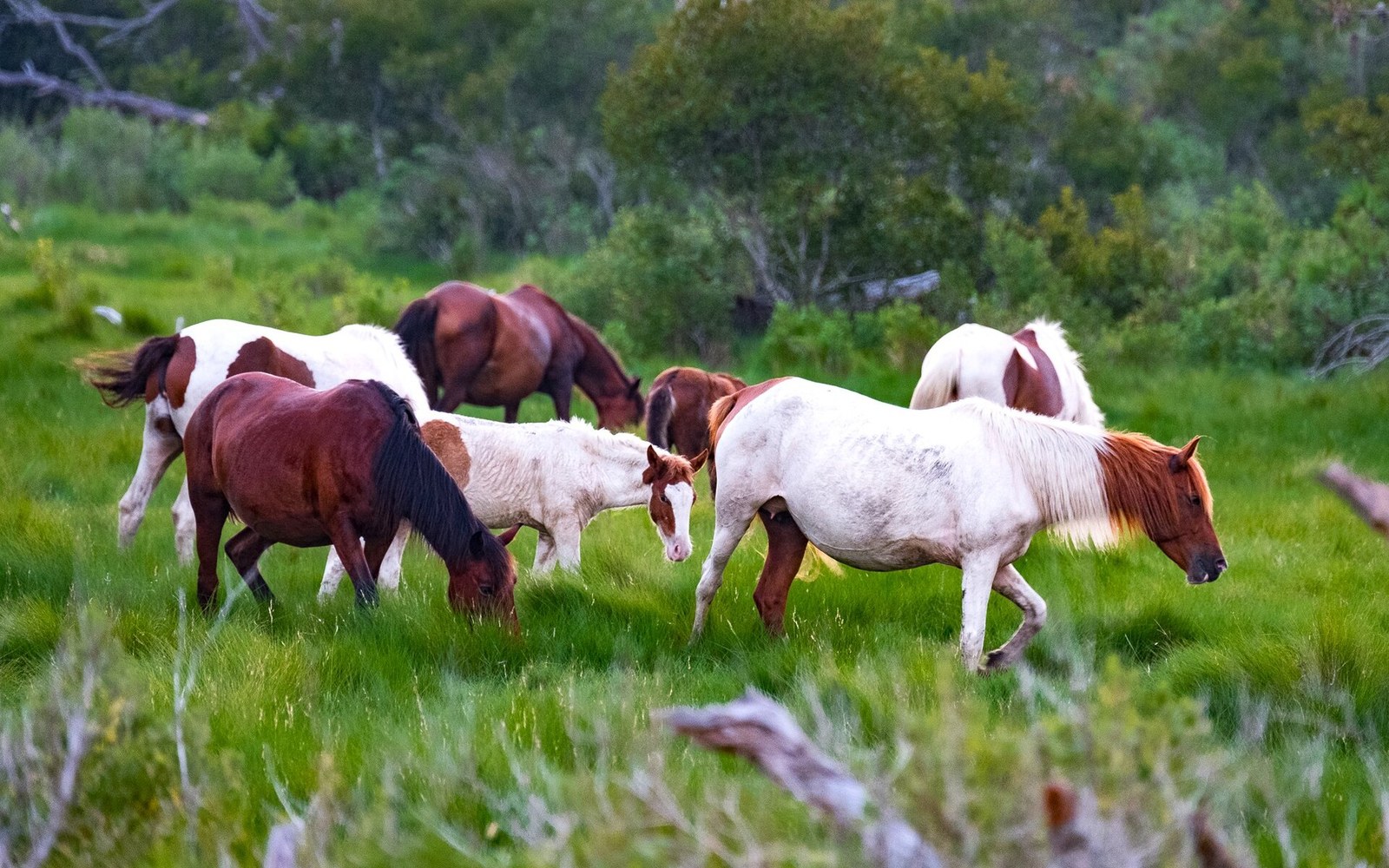
A managed herd.
Photo: Virginia Chincoteague Ponies · Wikimedia Commons
Ponies as a management tool
The feral ponies on Grayson Highlands are not native wildlife. They were introduced decades ago to graze the balds, and they have stayed. Small and sturdy — closer in build to the classic mountain pony than to a saddle horse — they are managed by a pony association together with the U.S. Forest Service and park staff to maintain herd size within limits the land can carry. They are wild in their behavior and not approachable on their own terms, but they show little fear of people, which makes them one of the more theatrical wildlife encounters in the Virginia mountains.
Their ecological function is real and documented. Woody shrubs — primarily sand myrtle, Catawba rhododendron, and the hawthorn species that ring the bald edges — advance steadily into open ground when grazing pressure is removed. The ponies crop that advance reliably, not selectively. Where they graze heavily, the grass-sedge community holds; where they are absent, the heath moves in within years. Park managers treat the herd not as an aesthetic asset, though it is one, but as a grazing instrument with measurable effects on vegetation structure.
This is, broadly, the same logic that drives cattle grazing on some federally managed balds in Tennessee and North Carolina. The Nature Conservancy and partners have used targeted grazing as a bald-maintenance tool across the southern Appalachians, recognizing that mowing and mechanical clearing are expensive and imperfect substitutes for an animal that grazes selectively in contour with the terrain.
What you see on the ground
Walking the open summits in late spring, the grass still short from winter, the ponies move in loose family groups. Their hooves have worn distinct trails across the exposed rock and turf. The evidence of their impact is legible: grazed turf grades sharply at the shrub line, and old exclosure areas — fenced plots used in earlier research — show the contrast in miniature, hawthorn already knee-high inside the wire while the surrounding bald stays cropped flat.
The management logic
Ponies introduced deliberately as a grazing tool, not as a feral population that happened to stay
Herd size actively managed to match carrying capacity of the open ground
Woody shrub encroachment is measurable and rapid when grazing is removed
Targeted grazing is the preferred tool over mechanical clearing across southern Appalachian bald management
The balds also host a suite of species that depend on that openness. Dark-eyed juncos and common ravens nest in the surrounding spruce. Saw-whet owls use the ecotone between forest and open ground. The rare spreading avens, Geum radiatum, clings to the exposed rock outcrops — a federally endangered species that needs exactly this kind of high, open, wind-scoured ground, and benefits from the same grazing regime that stops the shrubs from covering it.
The balds look like they belong to a different, older landscape. In a way they do. But they are also actively tended — by ponies doing, unintentionally, what the park needs them to do.