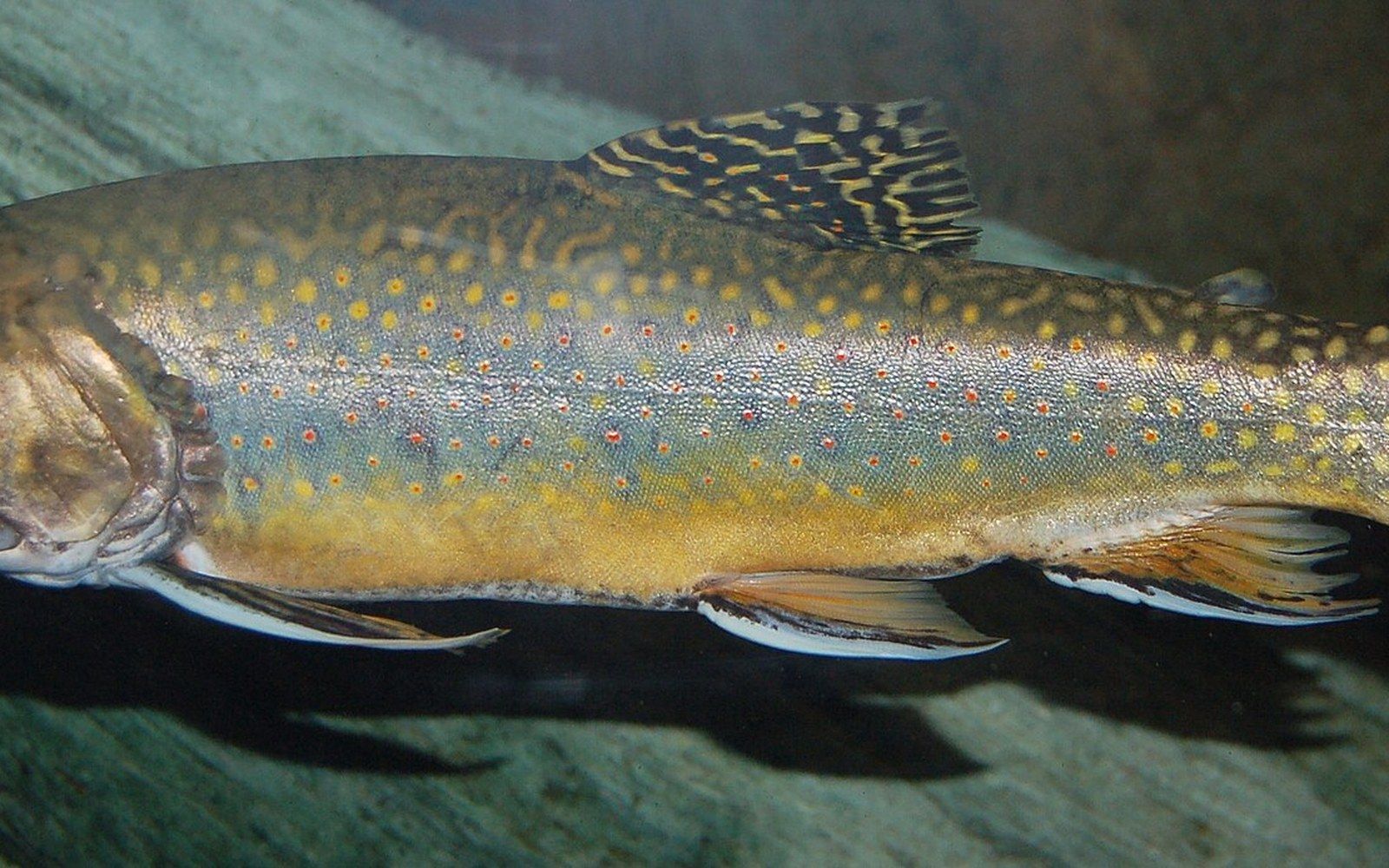
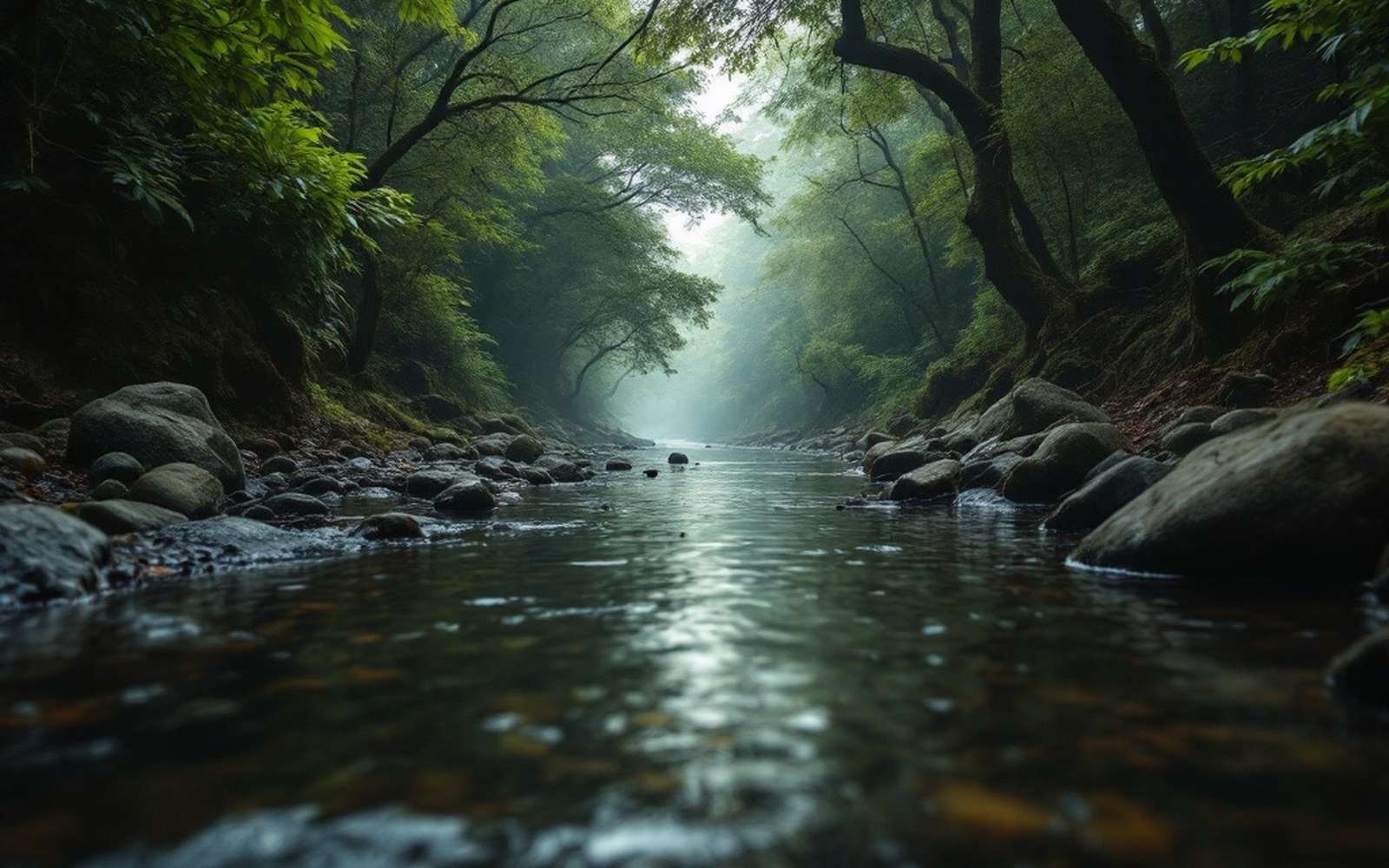
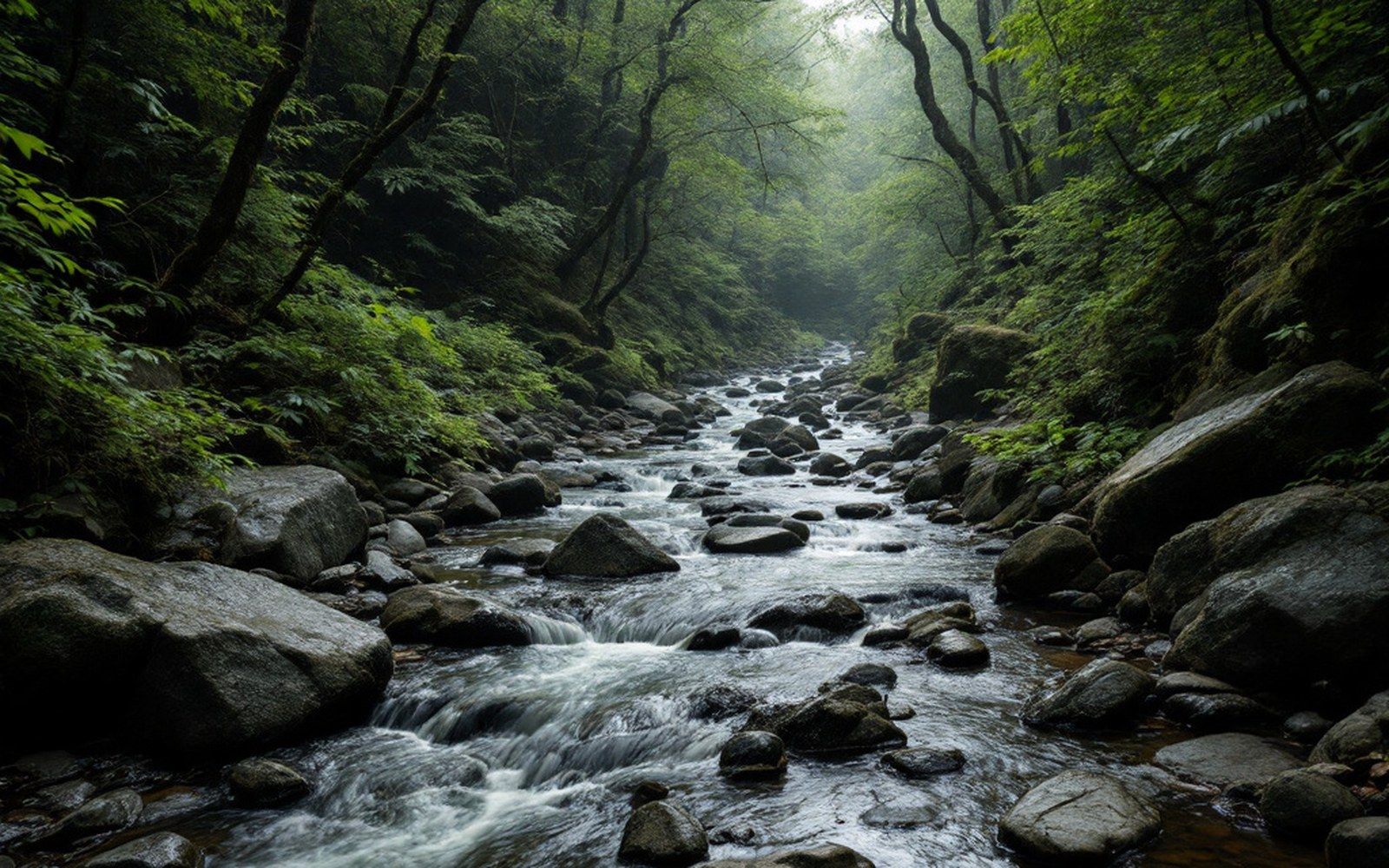
A brook trout holding in a mountain stream is reading the whole watershed above it — every cleared slope, every road crossing, every stretch of bank left open to the sun.
What it is and where it belongs
The brook trout is not, taxonomically speaking, a trout. Salvelinus fontinalis is a char, closer to lake trout and Arctic char than to the brown or rainbow that share many Virginia streams today. Brown trout arrived from Europe in the late nineteenth century; rainbows came from the Pacific slope. Brook trout were always here, threading the cold headwater streams of the Appalachians from Georgia north into Canada, and in Virginia they are the only salmonid — the only cold-water, oxygen-demanding member of that family — that the mountains produced on their own.
Their range in Virginia today is a map of altitude and shade. The southern Blue Ridge, the ridges above Shenandoah National Park, the high country around Mount Rogers — these are the strongholds, but even there the fish are being compressed upward. What they require is non-negotiable: sustained summer water temperatures low enough that oxygen remains dissolved and metabolism stays within the range the species can manage. That ceiling is generally cited at around 68°F for prolonged exposure; above it, brook trout stop feeding, weaken, and eventually die. The fish is a precision instrument tuned to cold, and cold is what the Appalachian highlands are slowly losing.
Canopy closed.
A thermometer with fins
Because brook trout cannot lie about their requirements, their presence or absence reflects conditions across an entire watershed rather than just the pool where you find them. A stream running cold enough to hold trout in August is a stream with enough canopy to intercept solar radiation, enough groundwater upwelling to buffer air-temperature swings, enough intact vegetation along its banks to slow and filter runoff. A riparian canopy — the corridor of trees shading both banks — is not decorative. It is the mechanism that keeps headwater temperatures in the range brook trout need, often by several degrees compared with an open reach of the same stream.
Water temperature surveys across Virginia's mountain streams, conducted by the Virginia Department of Wildlife Resources and university researchers, have documented the pattern repeatedly: stream reaches that lose their bankside trees warm measurably within a season. Road crossings that expose stream surfaces, even briefly, create thermal barriers that can interrupt trout movement between cooler and warmer stretches. A culvert that raises temperature by two degrees in a ten-yard passage can function as a wall.
overhead tree cover on both banks, reducing solar heating
Clean spawning gravel
undisturbed stream-bottom substrate for reproduction
High dissolved oxygen
maintained by cold water; falls as temperature rises
Intact invertebrate community
insects in the drift as a food source
This is why the shade over a cold mountain stream matters at the watershed scale, not just at the bankside scale: decisions made on ridges and upper slopes — what gets logged, what road gets built, where a skid trail crosses a seep — register in the pools below. The brook trout does not differentiate between causes. It registers outcomes.
The squeeze from two directions
Brook trout in Virginia face two simultaneous pressures that amplify each other. The first is the one already described: the warming of stream temperatures as land use changes and as the broader climate baseline shifts upward. The second is competition from introduced species, particularly the brown trout and the rainbow trout, both of which tolerate somewhat warmer water and which, in many streams, have displaced brook trout from lower and middle elevations entirely.
The result is a population pushed to the headwaters — the smallest, coldest, most isolated stream segments. Those segments are refugia, not a recovered abundance. A brook trout population living in the top mile of a hollow above four thousand feet is genetically isolated from populations in adjacent drainages. It may hold on for decades in a good wet summer and crash in a dry one. The smaller the fragment, the less resilience it carries.
Closed canopy over water is the cheapest cooling system in the state, and the only one brook trout have.
Virginia's native brook trout — often called "native brookies" by researchers distinguishing them from hatchery-stocked fish — are also genetically distinct from hatchery strains that have been stocked across the state since the late 1800s. Studies using genetic analysis have identified populations in Virginia's remote mountain headwaters that carry a genetic signature largely uncorrupted by hatchery influence. These are the fish the mountains produced over millennia of isolation, adapted to their specific streams. They are not interchangeable with hatchery fish, and stocking in their streams can dilute the very genetic integrity that makes them worth protecting.
What the recovery picture looks like
Shenandoah National Park removed non-native brown and rainbow trout from several streams beginning in the 1980s, a project that required repeated electroshocking passes over years before brook trout began recolonizing downstream reaches they had not occupied in decades. The work demonstrated that native brook trout, given space and cold water, will recover — but the precondition is that the thermal and genetic competition has to be removed first.
The Civilian Conservation Corps planted trees along mountain stream corridors in the 1930s, work that had a decades-long payoff in shade the CCC workers never saw. Current riparian buffer restoration, supported by programs administered through the Virginia Department of Wildlife Resources and federal partners, continues the same logic: trees planted on streambanks now will keep water cold for brook trout in the 2040s and beyond.
The pressure timeline
Chronology
Late 1800sbrown trout (European) and rainbow trout (Pacific) introduced across Virginia streams, beginning displacement of native brook trout from lower elevations
1930sCivilian Conservation Corps riparian planting on mountain streams; long-term canopy benefit
1980s onwardShenandoah National Park begins non-native trout removal projects; native brook trout begin recolonizing vacated stream reaches
Presentgenetic surveys identify isolated native-strain populations in remote headwaters; hatchery stocking history complicates conservation assessment in many drainages
Outside the national park, the picture varies by watershed. Some streams on national forest land retain strong native populations. Others have been stocked so heavily and so long with hatchery fish that native genetic integrity is difficult to assess. Buchanan County and the coalfield counties in the far southwest hold streams whose trout history is complicated by a century of land-use change; the fish that remain there are often found in the steepest, most inaccessible drainages.
The brook trout asks for nothing exotic: cold water, clean gravel to spawn in, overhead cover, insects in the drift. In a different century, that was not much to ask of an Appalachian watershed. In this one, delivering it requires decisions made at every point in the landscape above the stream — which is why the fish, small and brilliant as a painted tile, has become the clearest available signal of whether a mountain watershed is holding together or coming apart at the seams.