In the Great Dismal Swamp, the worst fires are the ones you cannot see.
Dry peat burns below the surface for months, and is put out by raising the water table rather than from above.
What peat is, and why it burns the way it does
Peat is compressed, incompletely decayed plant matter — sphagnum moss, sedge, cypress root — accumulated over millennia in waterlogged ground where decomposition runs slower than growth. In the Great Dismal Swamp, the peat layer reaches more than ten feet deep in places, an archive of plant life built since the last glacial period. That organic mass holds an enormous amount of carbon, and when it dries, it holds an enormous amount of fuel.
Surface fires behave the way a walker expects: they move with the wind, they respond to fire lines and water drops, they go out when the fuel is gone. Peat fires do not behave that way. Once ignition reaches the dry organic layer below the surface — sometimes carried down by a lightning strike or by a surface fire that finds a crack — the burn moves laterally and downward through the matrix, consuming material that has no contact with open air. Oxygen reaches it through the peat's own pore structure, slowly enough to sustain smoldering combustion for weeks or months without producing open flame. Rain does not reach it. You can walk across actively burning peat and not know it until the ground gives way.
Key fire and peat facts
Peat layer depth in the Great Dismal: exceeds ten feet in some areas
2008 Dismal Swamp fire: burned more than 100 days, approximately 3,000 acres
Control method: ditch-blocking and water-table manipulation, not surface suppression
Smoke from 2008 fire reached the North Carolina coast
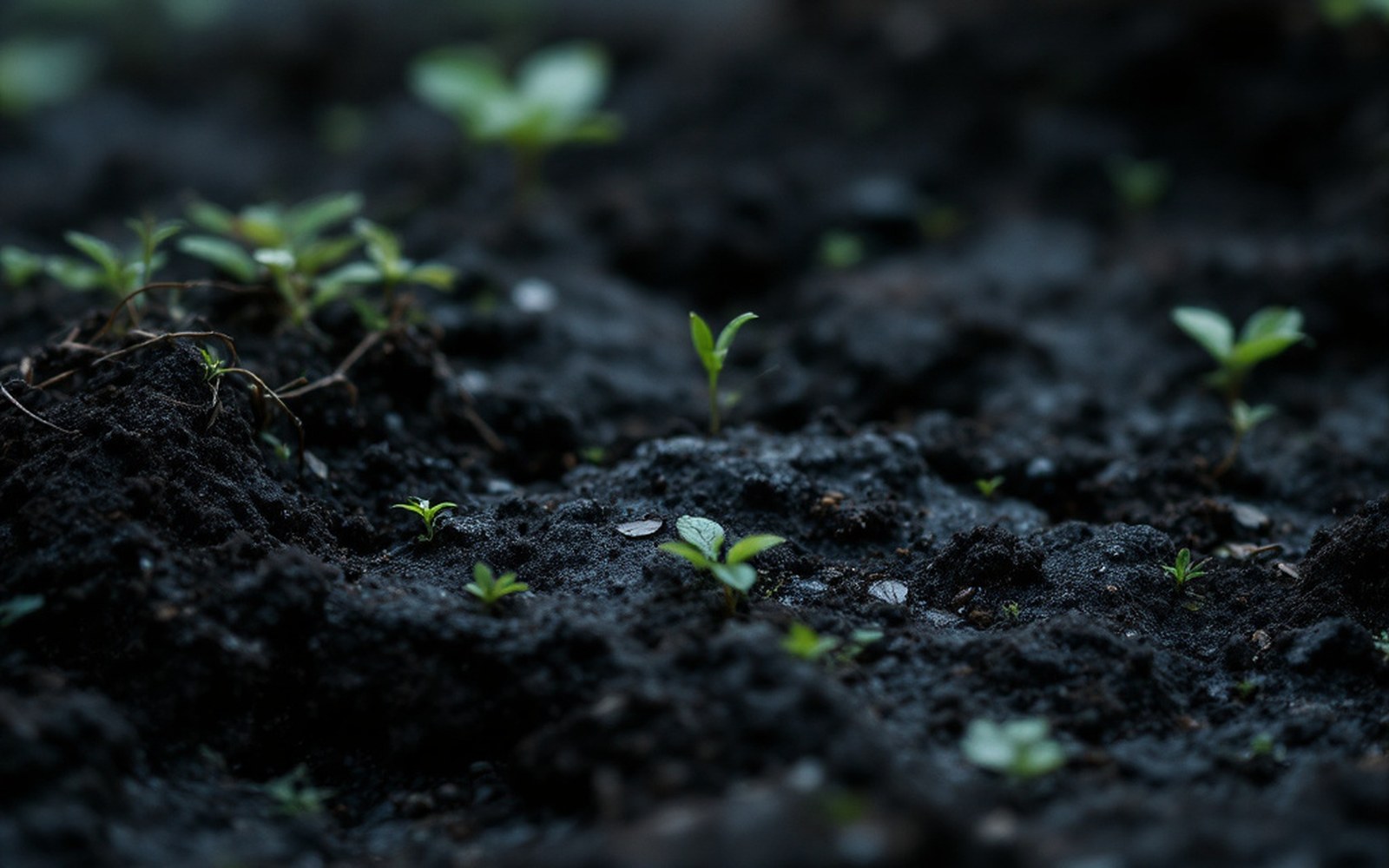
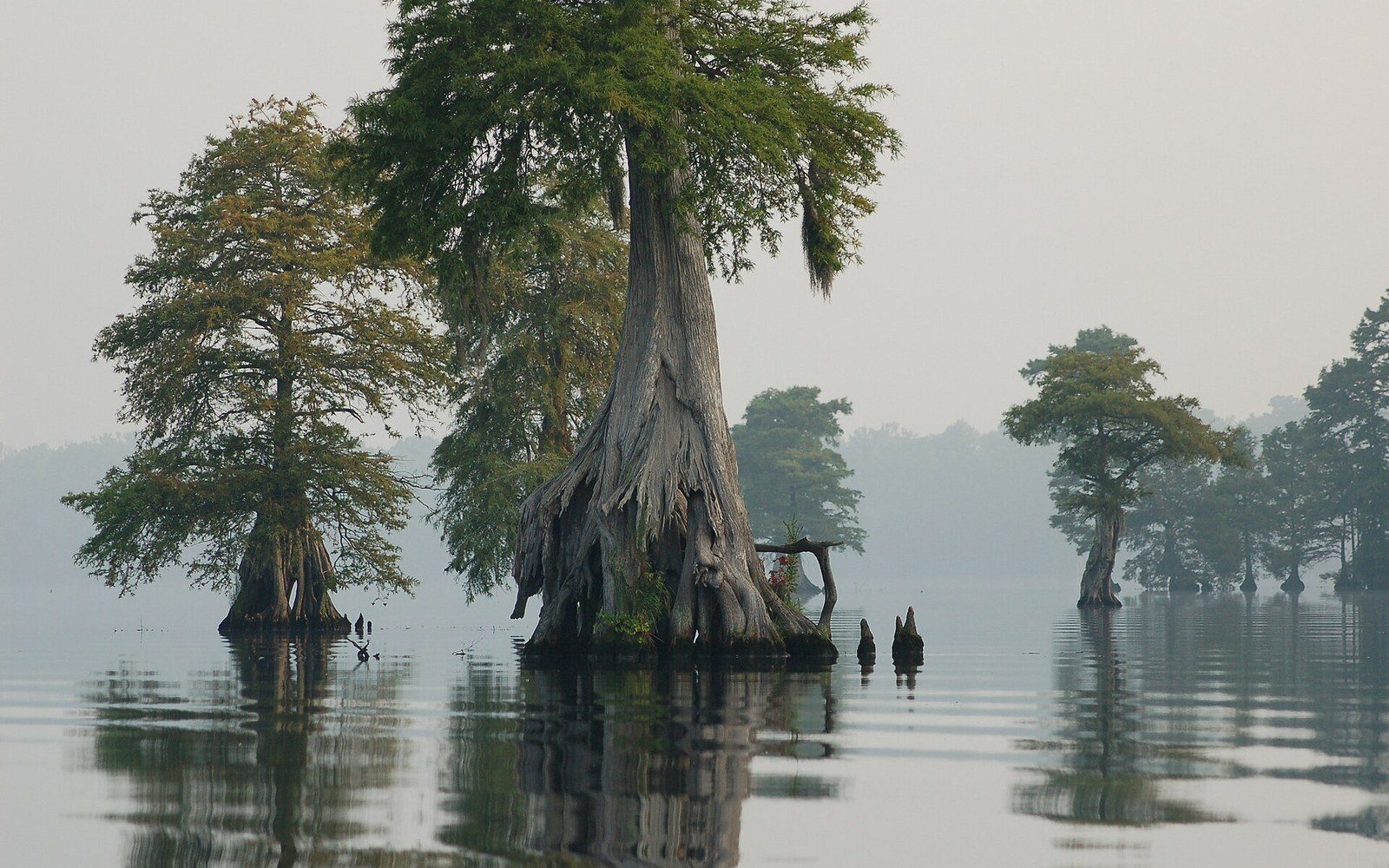
Black water.
Photo: Photo of the Week - Great Dismal Swamp National Wildlife Refuge (VA) · Wikimedia Commons
The Dismal and what drought does to it
The Great Dismal Swamp sits across the Virginia–North Carolina line, and its fire history is inseparable from its drainage history. Beginning in the eighteenth century — George Washington was among the early investors — a grid of ditches was cut through the swamp to drain it for logging and agriculture. Those ditches lowered the water table across hundreds of thousands of acres, and drained peat dries and subsides, pulling the surface further from saturation even after active cutting stopped. A swamp that was once self-sustaining — its peat staying wet because water had nowhere to go — became a landscape that drains toward its own ditches during every dry spell.
Drought years are the dangerous ones. When the water table drops far enough below the peat surface, the organic layer desiccates from the top down. The 2008 fire in the Dismal burned for more than one hundred days across roughly three thousand acres; the U.S. Fish and Wildlife Service, the Virginia Department of Forestry and other partners eventually brought it under control not by attacking it from above but by manipulating water levels — blocking ditches, pumping water in, and raising the table until the saturated peat could no longer sustain combustion. Fighting the fire directly, with hoses and retardant from the air, was largely ineffective. The fuel was underground.
A substantial bear population sits within an hour of one of the most densely settled stretches of the coast.
Why the water table is the answer, and the problem
The current management strategy in the Dismal, carried on in partnership with the U.S. Fish and Wildlife Service and informed by work done through the Chesapeake Bay Program and allied wetland initiatives, involves deliberately blocking or plugging the historic ditch network to hold water on the landscape. Re-wetting raises the water table, keeps the peat saturated, and reduces fire risk. It also reverses subsidence and begins, slowly, to restore the hydrological conditions under which the peat formed in the first place.
The tension is that the swamp's peat body, even partially re-wetted, remains vulnerable at its edges and during prolonged drought. Climate projections for the mid-Atlantic suggest longer dry intervals between precipitation events, which means the window during which surface ignition can reach dry peat will likely widen. The smoke from a peat fire carries fine particulates and combustion gases at low elevation for long distances — the 2008 smoke reached the North Carolina coast — and the carbon stored in the peat, some of it thousands of years old, is released in a matter of months. That carbon does not come back on any human timescale.
What re-wetting does
Blocks and plugs historic drainage ditches cut from the 18th century onward
Raises the water table to keep organic peat layer saturated
Slows or reverses peat subsidence
Reduces fuel availability for subsurface ignition
The Dismal is being deliberately re-wetted. The peat remembers every ditch that was ever cut through it.