What the animal actually is
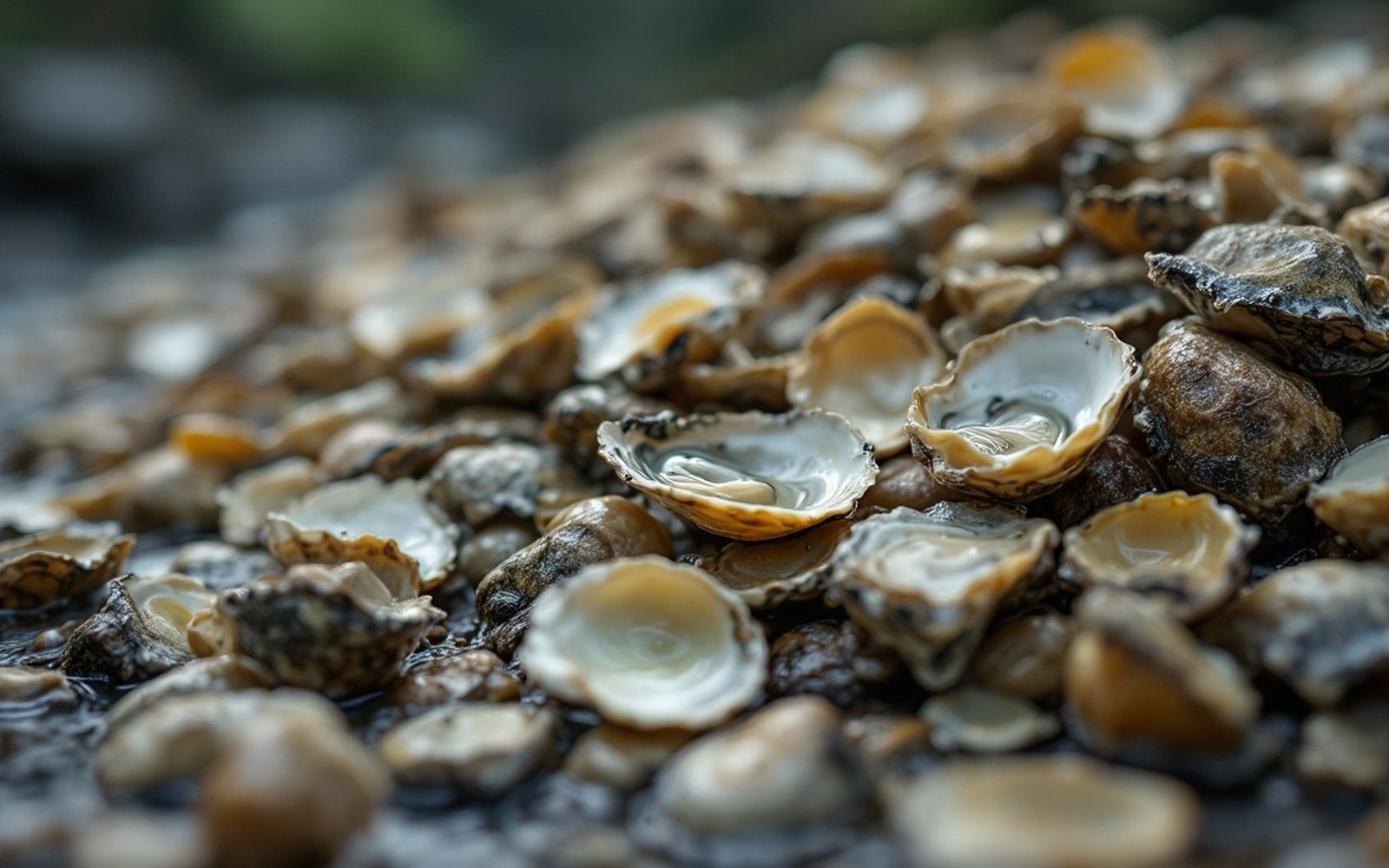
An eastern oyster, Crassostrea virginica, is a bivalve mollusc that spends its larval days drifting and its adult life cemented in place. That immobility is the key to understanding everything else about it. Fixed to a substrate, pulling water across its gills, the animal feeds by filtration — drawing in suspended particles, trapping phytoplankton and detritus, and releasing clarified water. A single adult oyster can filter somewhere between twenty-five and fifty gallons of water in a day; a functioning reef running across several acres moves volumes of water that no engineered system can replicate at comparable cost. The Bay was once packed with oyster reefs extensive enough to filter its entire volume in roughly a week. That figure, derived from historical modelling by fisheries ecologists, is the baseline against which the present is measured, and the present does not come close.
But filtration is the second thing an oyster reef does. The first, structurally, is to exist. Oysters are among the handful of species that qualify as ecosystem engineers: they build the substrate on which subsequent generations settle. A single oyster on bare mud offers a surface; a cluster of oysters over time becomes a reef, elevated off the bottom, offering crevices and current breaks that attract juvenile fish, blue crabs, grass shrimp, and a dozen invertebrate taxa that have nowhere else to go in the soft-bottom shallows that define most of the Bay's margins. The fish that anglers and crabbers pursue are, in part, the product of a structure that the oyster alone builds.
Flat water, flat cloud.
What happened to it
The Chesapeake once held the most productive oyster grounds on the Atlantic coast. Harvests in the late nineteenth century ran into the tens of millions of bushels a year — numbers that seem impossible now, when landings are a fraction of historic levels. The collapse came in layers. Market overharvesting in the late 1800s stripped reefs faster than recruitment could rebuild them. Hydraulic dredging turned what remained of the reef structure into rubble and scattered shell. Then two diseases arrived: Perkinsus marinus (Dermo) and Haplosporidium nelsoni (MSX) spread through the Bay's warmer, saltier waters from the mid-twentieth century onward, killing oysters before they could reproduce at scale. By the time water quality was added to the list of stressors — nitrogen and phosphorus loading from agriculture and developed land fostering the algae blooms and low-oxygen zones that suffocate bottom-dwelling animals — the Bay's oyster population was operating at an estimated one percent of its pre-colonial abundance. That figure comes from peer-reviewed ecological work, not advocacy, and it has driven restoration policy in the region for two decades.