The number that sets the table
Every spring, watermen up and down the Chesapeake Bay wait for a single figure: the estimated total blue crab population produced by the winter dredge survey. It is not a forecast. It is not a model run in isolation. It is the result of sampling crabs in their dormant state — buried in the bottom sediment in cold water, barely moving — when the population is as close to countable as it ever gets. That number drives harvest limits for the season to come, and nearly everyone with a financial stake in the Bay's most iconic fishery knows it by heart.
The survey has been conducted jointly by the Virginia Institute of Marine Science and the Maryland Department of Natural Resources every winter since 1990. Crews drag standardized dredges along fixed transects across the Bay and its tidal tributaries, recording the crabs they collect by sex, size and maturity. The methodology has remained consistent enough over more than three decades that managers can track genuine trends rather than artifacts of changing technique — a harder problem to solve than it sounds in a fishery that spans two states, multiple tributaries and a tidal gradient running nearly two hundred miles.
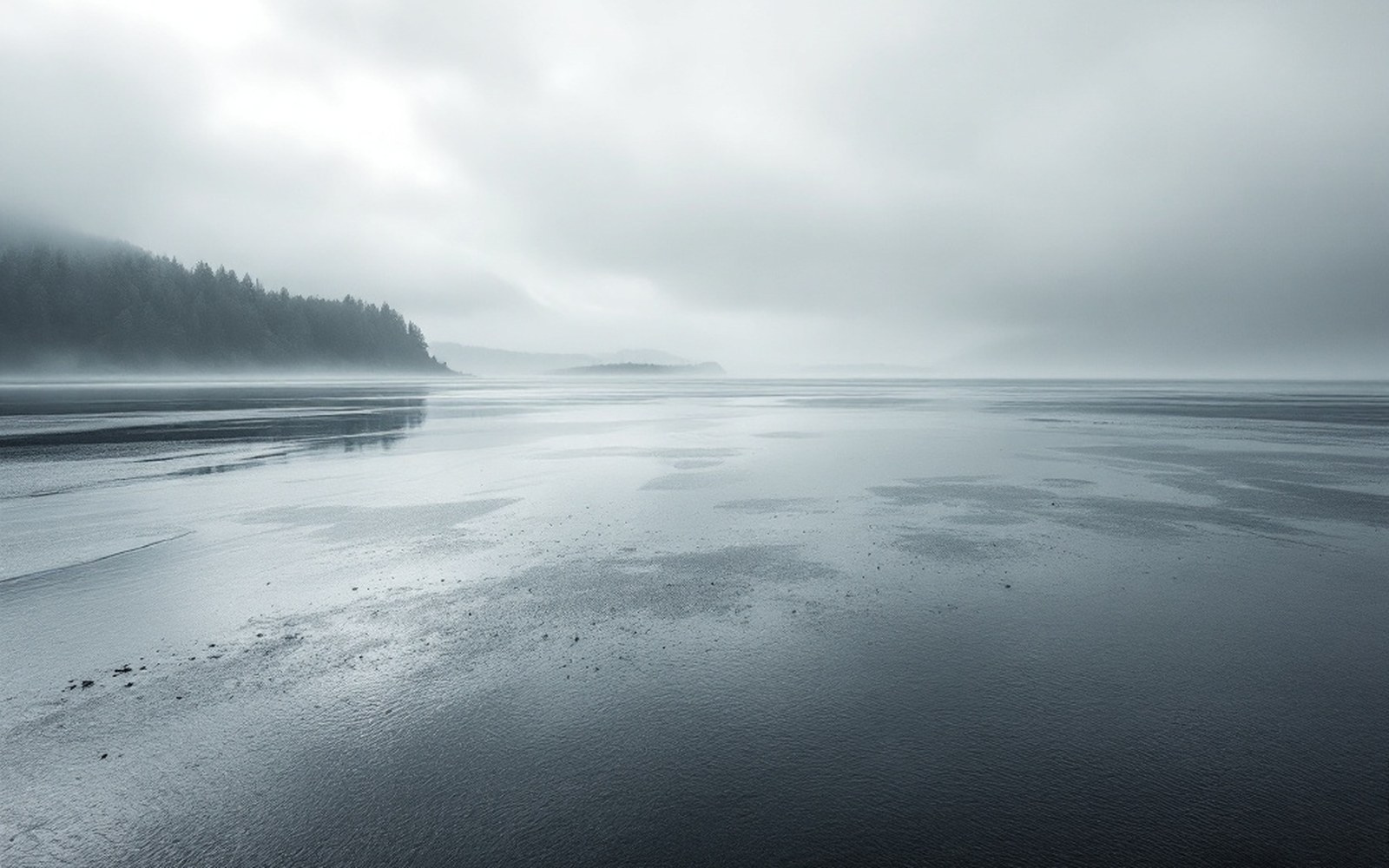
Flat water, flat cloud.
What comes out is an estimate of three populations that are managed somewhat differently: adult females, adult males, and juveniles. The female count draws the most attention. Callinectes sapidus — the blue crab — has a life history that makes the spawning stock the critical lever: females mate only once, storing sperm for multiple spawnings, and most migrate to the lower Bay and the Virginia coastal plume to release larvae. If the female population drops, recruitment a year or two later drops with it, and the Bay gives you almost no buffer. The stock collapsed badly enough in the late 1990s and again in the mid-2000s that emergency restrictions followed; the dredge survey was the instrument that documented both events and eventually confirmed partial recovery.